
Authorised India Distributor
PP/PE Geocell Production Line
Produce PP or PE geocells in-house, from 50 to 300 mm tall, for road and railway subgrade, slope protection, channel lining and retaining walls. The Tongjia geocell line is supplied, installed and supported across India by Magnum.
300 mm
Max Geocell Height
4 × 5 m²
Unfolded Panel Area
2 Models
TJ-TGGC90 and TJ-TGGC120
China
Country of Origin
16-20 weeks
Typical Lead Time
OEM Certified
Build Standard
Factory-Backed
Install & Training
Overview
About this machine
What the Tongjia geocell line produces
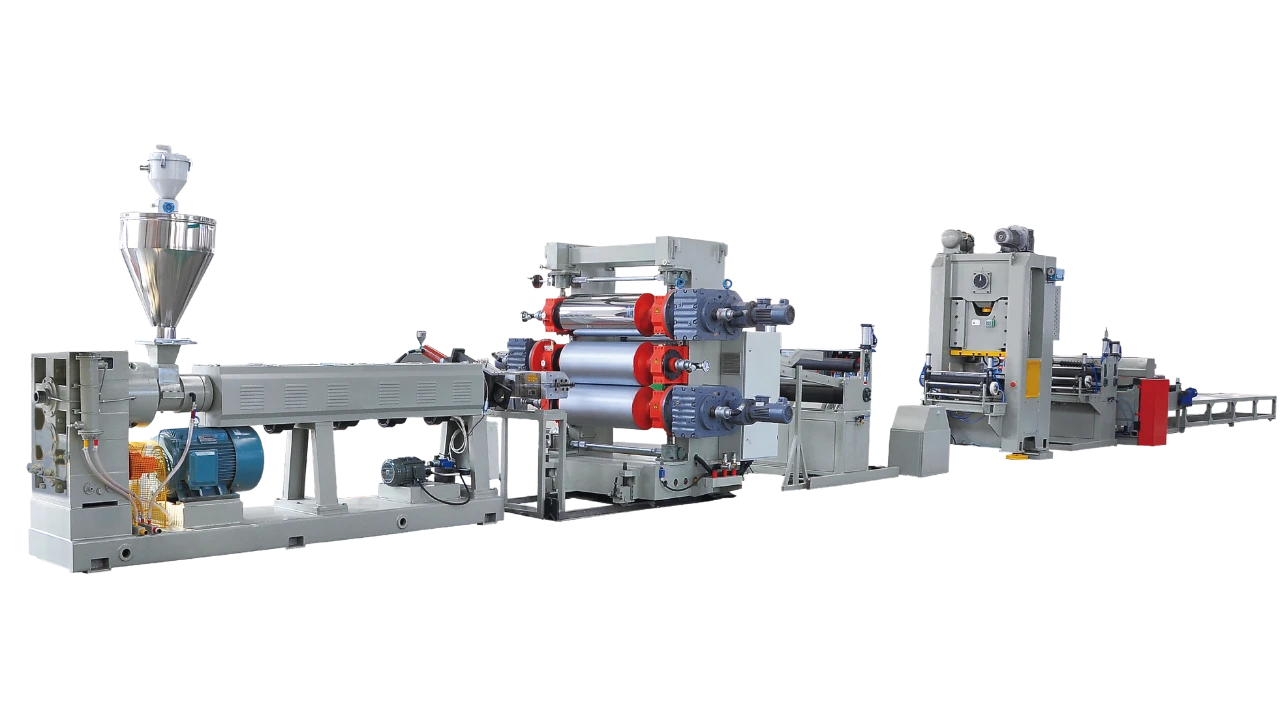
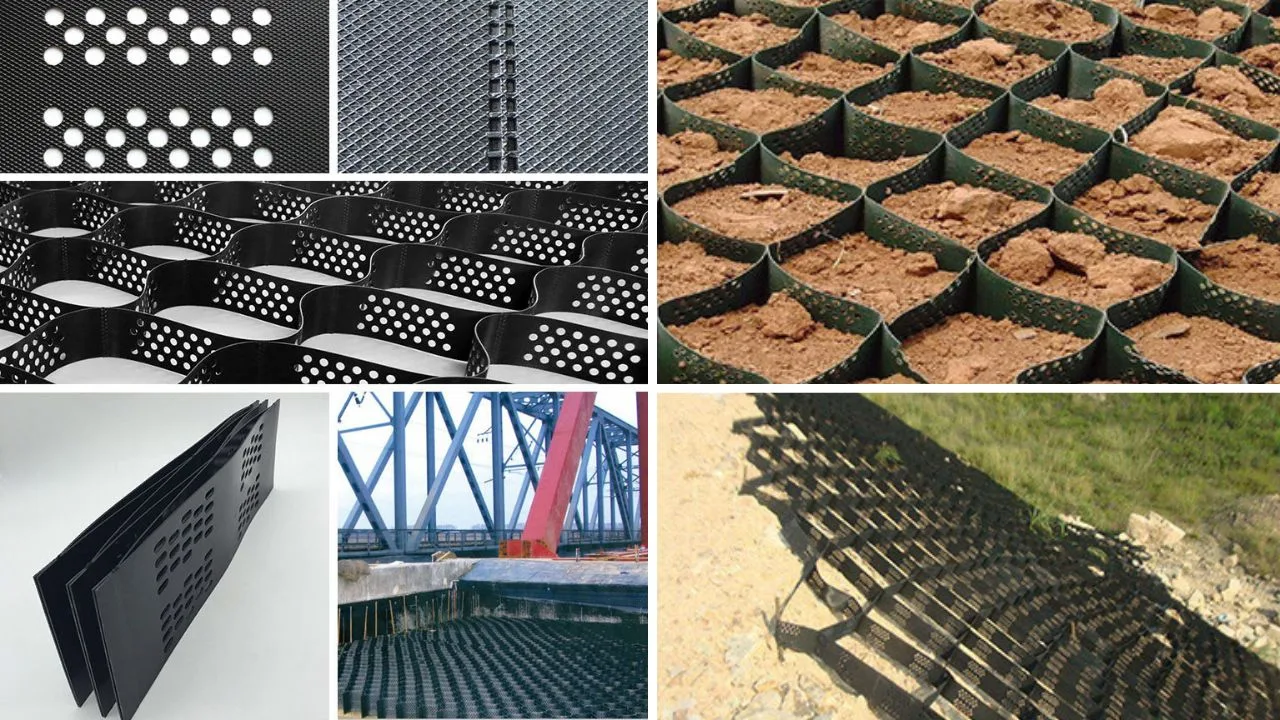
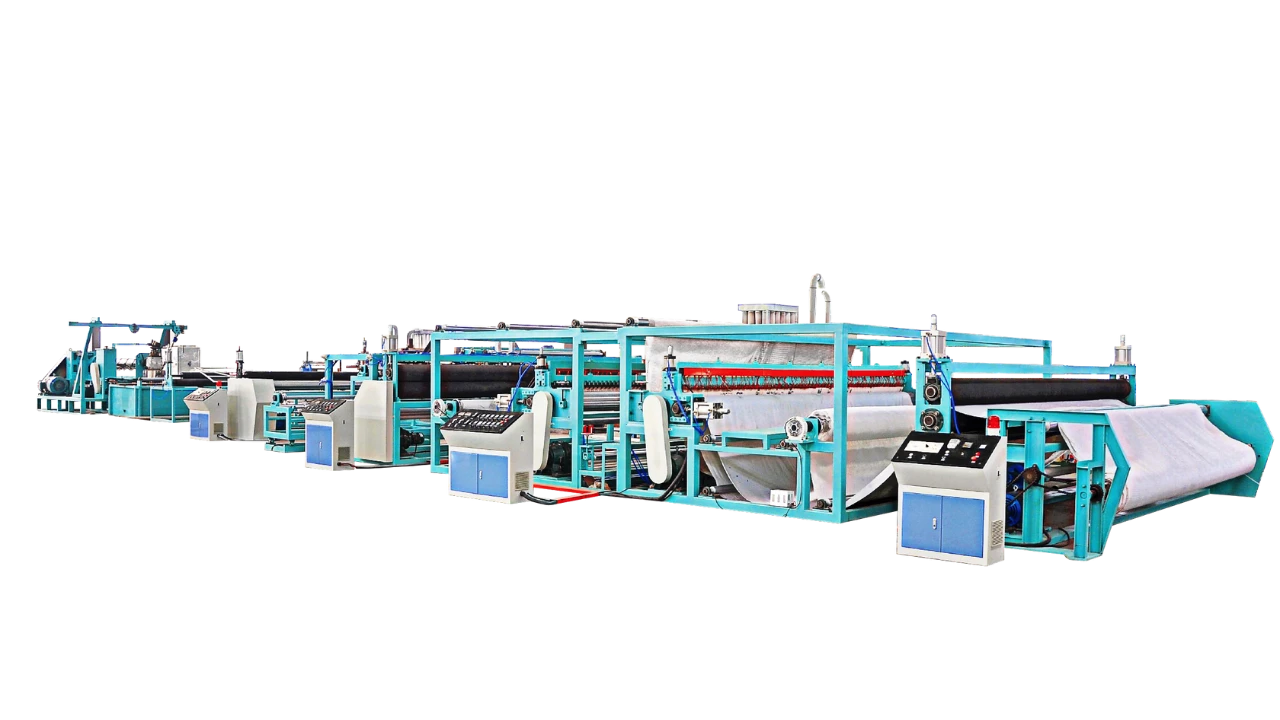
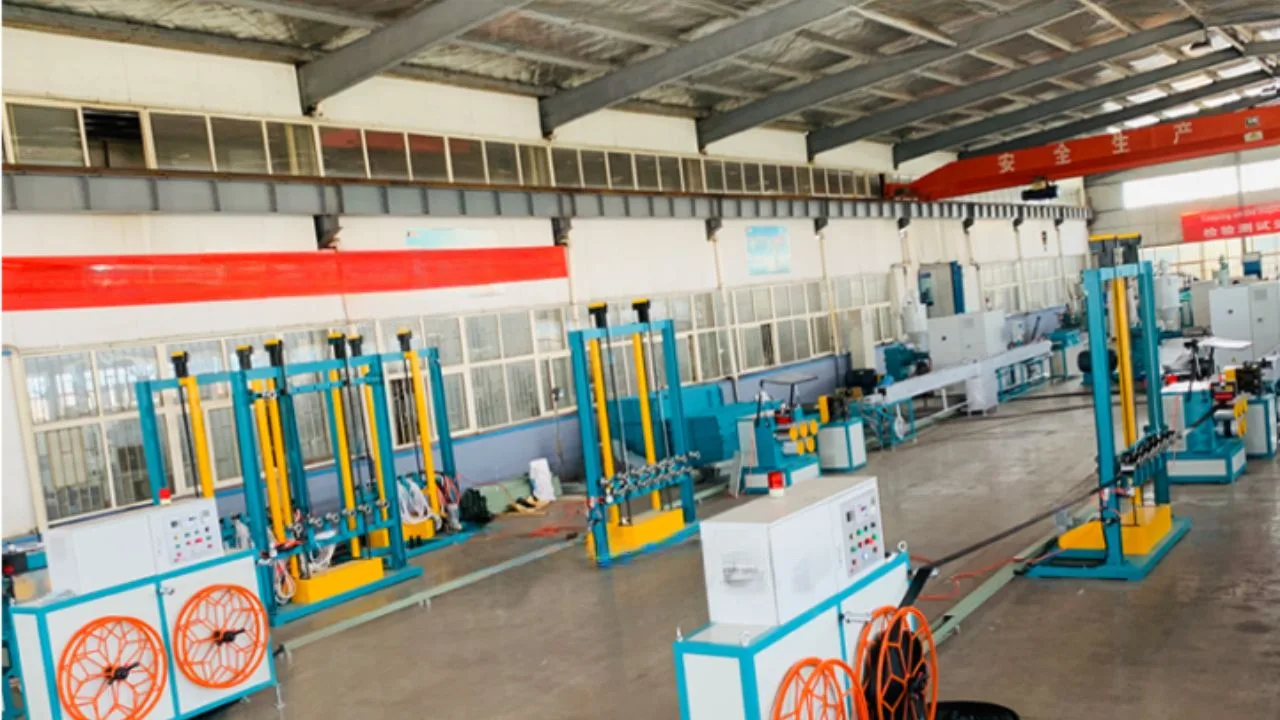
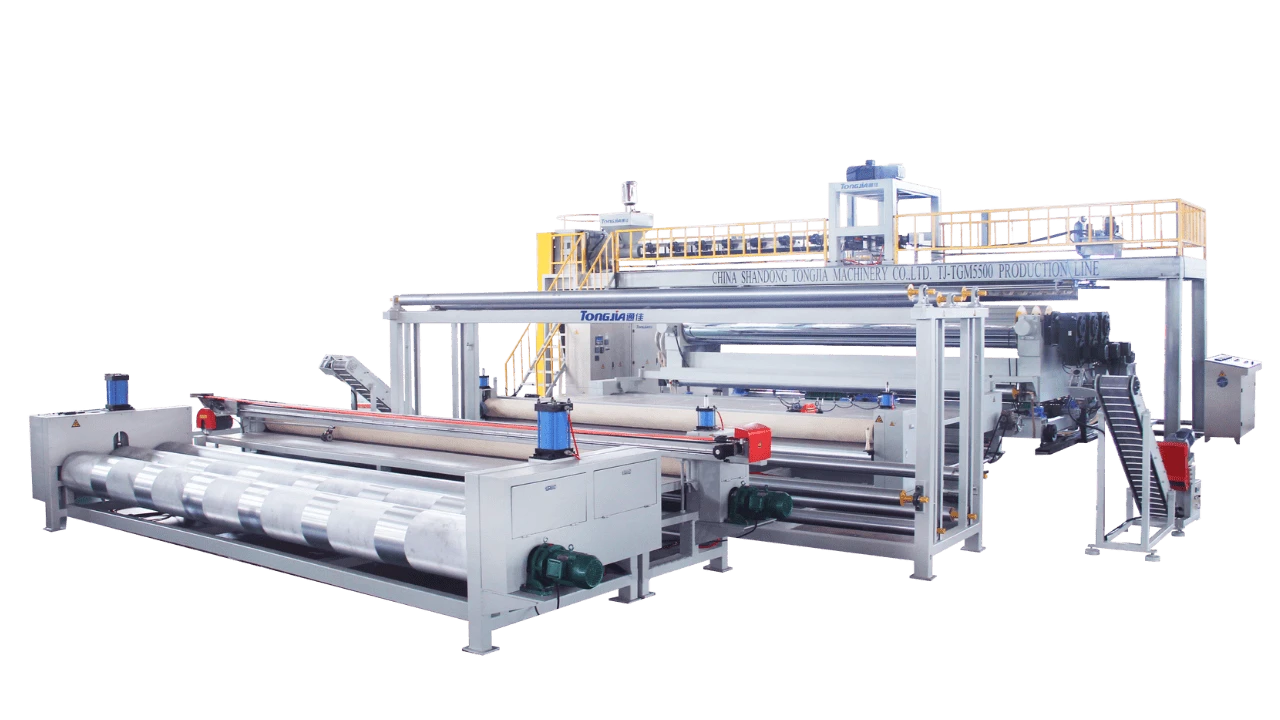
The Tongjia PP/PE geocell production line makes geocells by ultrasonically welding strips of PP or PE sheet together at offset, regular intervals along their length. Stack the welded sheets, then pull them apart on site, and the offset welds open the strips into a three-dimensional honeycomb of interconnected cells. Fill those cells with soil, gravel, sand or concrete and you have a cellular confinement system that distributes load, confines fill material and prevents the lateral spreading that erodes or collapses unconfined ground.
Buyers know this product by several names. Civil engineers specify it as a geocell or cellular confinement system. Contractors and traders call it PP geocell, PE geocell, plastic geocell, honeycomb geocell, 3D geocell or geoweb. If you searched for any of those terms, this is the machine that makes it.
Built for manufacturers who want to make geocell in-house
This line is aimed at companies that want to produce and sell geocells, not buy finished panels from traders. The main buyers are geosynthetics manufacturers adding geocell to an existing range, PP or PE sheet processors diversifying into geotechnical products, and infrastructure material suppliers who want to move from distribution into manufacturing. The two model sizes give a clear choice: the TJ-TGGC90 handles the most common height range (50 to 200 mm) in a smaller machine footprint, while the TJ-TGGC120 adds the 300 mm option for deeper reinforcement applications and has a wider build for higher throughput.
Geocell vs plain fill and riprap
Unconfined fill material (soil, gravel, sand) shifts laterally under load. Riprap is heavy, expensive to transport and labour-intensive to place. Geocell addresses both problems:
- Lateral confinement: The cell walls stop fill material from spreading sideways under load or water flow, so the reinforced layer stays stable rather than migrating over time.
- Load distribution: The three-dimensional structure spreads point loads across a wider area, which reduces settlement and surface deformation on weak or uneven subsoil.
- Installation speed: Panels unfold to 4 × 5 m² and can be pinned and filled quickly. The same volume of protection takes far longer to achieve with stone pitching or plain gravel.
- Weight and transport: Empty panels are light, flat and stackable. A lorry-load of geocell covers far more ground than a lorry-load of riprap, which matters on remote or difficult-access sites.
Industries that use geocells in India
Geocells made on this line are used across India's civil, infrastructure and geo-textile sectors:
- Highways and expressways: subbase reinforcement, unpaved road stabilisation and parking lot pavement on weak subsoil.
- Railways and metro rail: trackbed and embankment reinforcement under railway and metro projects.
- Slopes and embankments: erosion control and slope stabilisation on highway cuttings, embankment faces, canalbanks and hilly terrain.
- Retaining walls: geocell-faced earth retaining structures on road, rail and urban slopes.
- Channel and river bank lining: channel floor and bank protection against scour and erosion in irrigation, drainage and flood protection works.
- Sand dune and coastal stabilisation: dune fixation and shoreline protection against wind and wave erosion.
- Mining haul roads: reinforcement of temporary and permanent haul roads on mine sites and quarries.
Why source this line through Magnum
Magnum is the authorised India partner for Tongjia geocell machinery. One team manages the full project: sizing the line for your output targets and site, the import and customs clearance, installation on your floor with OEM-backed engineers, and operator training at start-up. Spares and technical support stay with the same contact after the line is brought online.
If you are evaluating a geocell production line or a PP/PE geocell manufacturing machine for an Indian plant, talk to our engineers. We will size the right model to your target heights and cell geometry, and give you a realistic lead time with a fully configured quotation.
Built For
Who this geocell production line is built for in India
Make PP or PE geocells in-house, whether you supply to road contractors, produce geosynthetics, or want to move from trading finished panels to manufacturing them. Find your fit below.

Geocell & Geosynthetics Producers
Make PP or PE geocells in-house and sell to road contractors, railway project suppliers and slope stabilization specialists across...

PP/PE Sheet Processors
Already run PP or PE sheet extrusion? Add a geocell line to your plant and enter geosynthetics without major raw material or skill...

Geotechnical Material Suppliers
Move from trading finished geocell panels to making them. Supply road contractors, slope protection projects and channel lining wo...

Geosynthetics Export Manufacturers
Produce standard PP/PE geocell panels for export markets in South Asia and the Middle East, where infrastructure investment is dri...
Specifications
Technical data
Specifications are supplied by the manufacturer. Custom configurations available. Speak to our engineers.
Request Full DatasheetModel TJ-TGGC90
Geocell Heights
50, 75, 100, 150, 200 mm
Sheet Thickness
1.1, 1.2, 1.5, 1.8 mm
Welding Distance
340-800 mm (adjustable)
Unfolded Panel Area
4 × 5 m²
Machine Footprint (L×W×H)
28 × 5 × 3 m
Model TJ-TGGC120
Geocell Heights
50, 75, 100, 150, 200, 300 mm
Sheet Thickness
1.1, 1.2, 1.5, 1.8 mm
Welding Distance
340-800 mm (adjustable)
Unfolded Panel Area
4 × 5 m²
Machine Footprint (L×W×H)
30 × 8 × 3 m
Both Models
Raw Material
PP (polypropylene) or PE (polyethylene)
Welding Technology
Ultrasonic welding (no adhesives)
Cell Structure
Three-dimensional alveolate (honeycomb)
Return on Investment
What this machine saves you
The numbers Indian manufacturers use to justify the CAPEX internally.
Up to 300 mm
Geocell Height
The TJ-TGGC120 produces geocells up to 300 mm tall for deep soil reinforcement and heavy haul road applications where shallow cells are not enough.
4 × 5 m²
Unfolded Per Panel
Each finished panel unfolds to 4 × 5 m² on site, which speeds up ground coverage and keeps installation labour low compared with stone pitching or riprap.
In-House
Geocell Supply
Bring geocell production on-site instead of buying finished panels from traders, and control your specifications, lead time and cost per square metre.
Complete Package
What's included with every machine
From factory to running on your floor, Magnum handles it end to end.
The Production Line
Factory-tested at the Tongjia OEM plant before dispatch
Import & Customs
Sea freight and customs clearance to your site, handled by Magnum
Installation & Setup
Coordinated by Magnum with OEM-backed engineers
Operator Training
On-site run-in and operator training at start-up
Factory-Supplied Spares
Wear parts sourced to order from the Tongjia OEM
Technical Support
Remote and OEM-backed support after start-up
Buying Through Magnum
One accountable partner, end to end
Magnum is the authorised India partner for Tongjia geocell machinery. We size the line with the factory for your target heights and cell geometry, manage import and customs, install it on your floor with OEM-backed engineers and train your operators at start-up. Wear parts and technical support run through the same contact afterwards.
Authorised India Partner
A direct link to the Tongjia factory for specification, pricing and engineering support.
One Point of Accountability
A single team for sourcing, import, customs, installation and training.
On-Site Installation & Training
Factory-backed engineers install the line and train your operators in person.
Factory-Supplied Spares
Genuine wear parts sourced directly from the Tongjia manufacturer.
Key Features
Engineering deep-dive
For maintenance teams and production engineers who want to look under the hood.
Six geocell height options from 50 to 300 mm on the TJ-TGGC120, from light road subbase up to deep soil reinforcement
Four sheet thickness settings: 1.1, 1.2, 1.5 and 1.8 mm for different load and application requirements
Adjustable welding distance from 340 to 800 mm for different cell aperture sizes
Finished panels unfold to 4 × 5 m² for fast, consistent site deployment
Three-dimensional alveolate cell geometry for high lateral confinement and load distribution
Two model sizes: TJ-TGGC90 (five height options, 28 × 5 × 3 m) and TJ-TGGC120 (six height options, 30 × 8 × 3 m)
Supplied, imported, installed and supported across India by Magnum
Watch It Run
See it in action
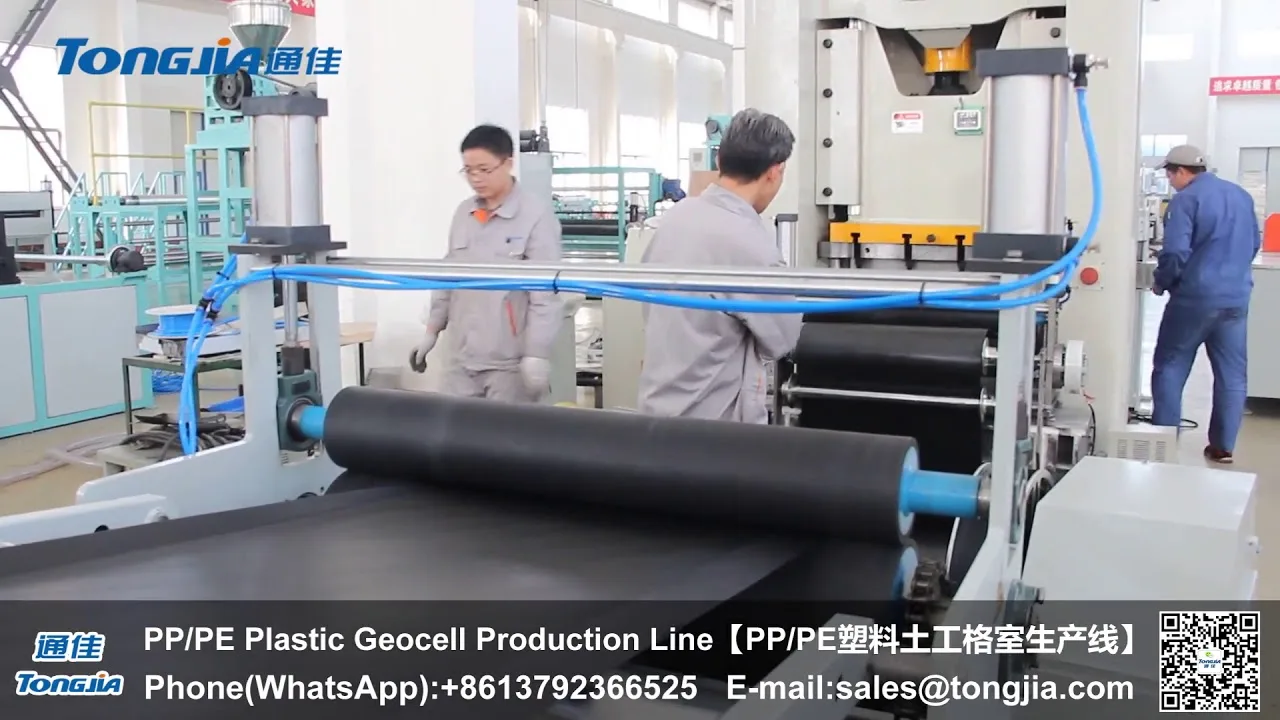
Real footage from OEM demonstrations and factory production trials.
Documentation
Technical downloads
Brochures, datasheets and guides, available on request.
FAQs
Questions Indian buyers ask us
Common questions Indian buyers ask us, answered upfront.
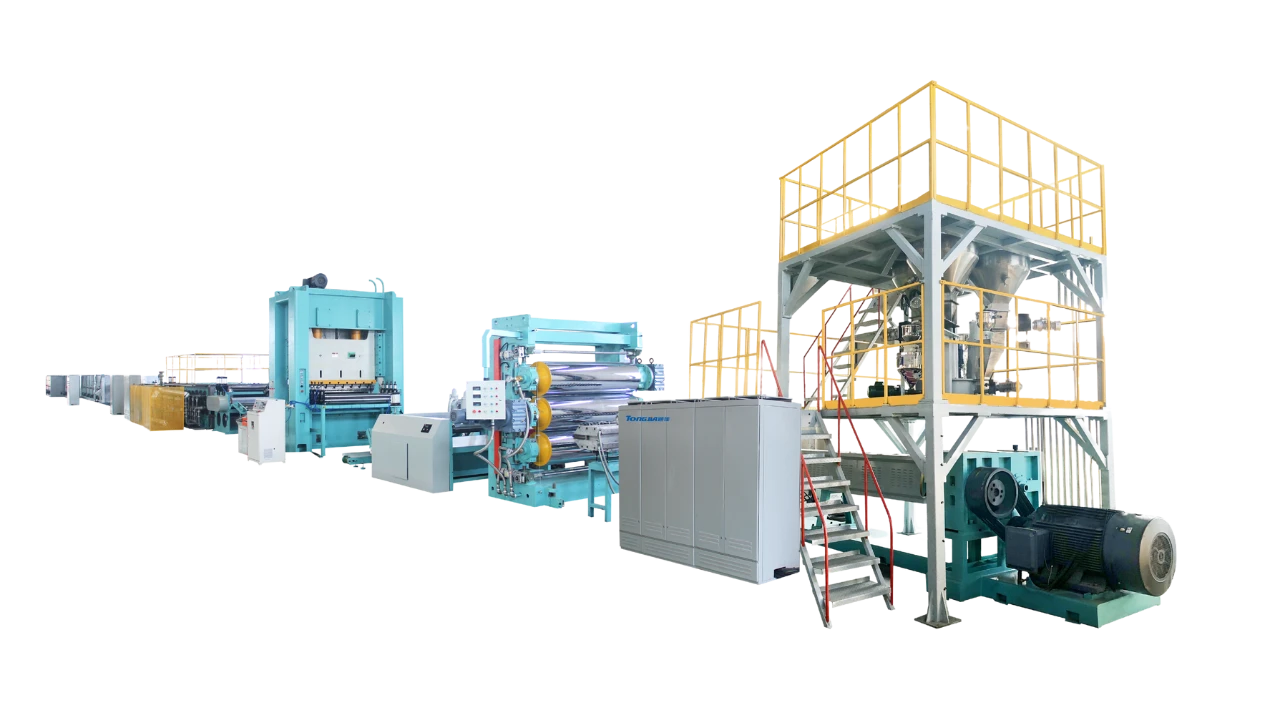
A geocell is a three-dimensional honeycomb structure made from strips of PP or PE sheet that are welded together at regular, offset intervals. When the welded stack is pulled apart, the strips open into interconnected cells that are filled with soil, gravel or concrete to reinforce and confine the ground beneath. This line makes geocells by ultrasonically welding strips of PP or PE sheet at adjustable intervals (340 to 800 mm), stacking and cutting the welded sheets, then dispatching them as flat panels that unfold to 4 × 5 m² on site.
Both models produce geocells in the same sheet thickness range (1.1 to 1.8 mm) and the same welding distance range (340 to 800 mm). The TJ-TGGC90 handles geocell heights from 50 to 200 mm and has a machine footprint of 28 × 5 × 3 m. The TJ-TGGC120 adds the 300 mm height option, which is used in deep soil reinforcement and heavy haul road applications, and has a larger footprint of 30 × 8 × 3 m. If your target market includes 300 mm geocell or you expect to grow into heavier applications, the TJ-TGGC120 is the right choice.
This line suits geosynthetics manufacturers adding geocell to an existing product range, PP or PE sheet processors diversifying into geotechnical materials, and infrastructure material suppliers who want to move from trading finished panels to manufacturing them. It is aimed at companies that want to make and sell geocell, not at contractors who deploy it on site. If you already produce geosynthetics or run PP/PE sheet extrusion, the line adds geocell with limited additional raw material or skills retraining.
Sheet thickness options are 1.1, 1.2, 1.5 and 1.8 mm on both models. Geocell height depends on the model: the TJ-TGGC90 produces 50, 75, 100, 150 and 200 mm. The TJ-TGGC120 adds 300 mm to that range. The welding distance, which sets the cell aperture size, is adjustable from 340 to 800 mm on both models, giving you control over the cell geometry for different applications.
The line works with polypropylene (PP) or polyethylene (PE) sheet. PP is the more common choice for standard geocell production in road and civil applications. PE is used where greater flexibility at low temperatures or chemical resistance is needed. Both materials produce a rot-resistant, corrosion-free geocell that will not degrade underground. The sheet is fed into the line at 1.1 to 1.8 mm thickness depending on the specification of the finished geocell.
Geocell is used across India's civil, infrastructure and geo-textile sectors: highway and expressway subbase reinforcement, unpaved road and haul road stabilization, railway trackbed reinforcement, slope and embankment erosion control, geocell-faced retaining walls, irrigation channel and river bank lining, sand dune and coastal stabilization, and parking lot pavement on weak subsoil. Mining sites use it for temporary haul roads and working platforms on weak ground.
Typical lead time is around 16 to 20 weeks: manufacture at the Tongjia plant in China, sea freight and customs clearance into India. Magnum manages the full chain, including import documentation, site installation with OEM-backed engineers, and operator training at start-up. Wear parts and technical support stay with the same contact after the line is brought online.
Some geocell production lines use hot pin or thermal bonding to join the strips. Ultrasonic welding uses high-frequency vibration to generate heat at the weld point only, which creates a clean, consistent bond without adhesives, open flames or extended heating cycles. The result is a uniform weld strength across the panel. The Tongjia line uses ultrasonic welding as its primary joining method and produces consistent output across the full 340 to 800 mm weld distance range.
Engagement options
Evaluate PP/PE Geocell Production Line on your terms
Capex decisions deserve a serious conversation. Pick the channel that fits your stage, whether you're specifying, validating or still scoping. Each one routes to the right person on our team within one business day.
Request a Quotation
Configured pricing with lead time, installation, spares and AMC. Detailed proposal in one business day.
Application Engineer Call
30-minute technical review of throughput, substrate compatibility and integration with your existing line.
WhatsApp the Sales Desk
Fastest channel for spec sheets, brochures and quick clarifications. Replies during business hours.
See the Machine Running
Arrange a factory demonstration or a recorded run of this machine on your material.
Enquire
Talk to a Magnum specialist
Tell us about your production line and what you're trying to achieve. We'll come back within one business day with pricing, lead time and any technical questions answered.