
Authorised India Distributor
PP/PE Biaxial Geogrid Production Line
Produce high-strength PP or PE biaxial geogrids in-house, for roads, railways, retaining walls and mine tunnels. The Tongjia biaxial geogrid line is supplied, installed and supported across India by Magnum.
6,000 mm
Max Finished Grid Width
50-50 kN/m
Max Tensile Strength
2 Models
4,000 mm and 6,000 mm Lines
China
Country of Origin
16-20 weeks
Typical Lead Time
OEM Certified
Build Standard
Factory-Backed
Install & Training
Overview
About this machine
What the Tongjia geogrid line produces
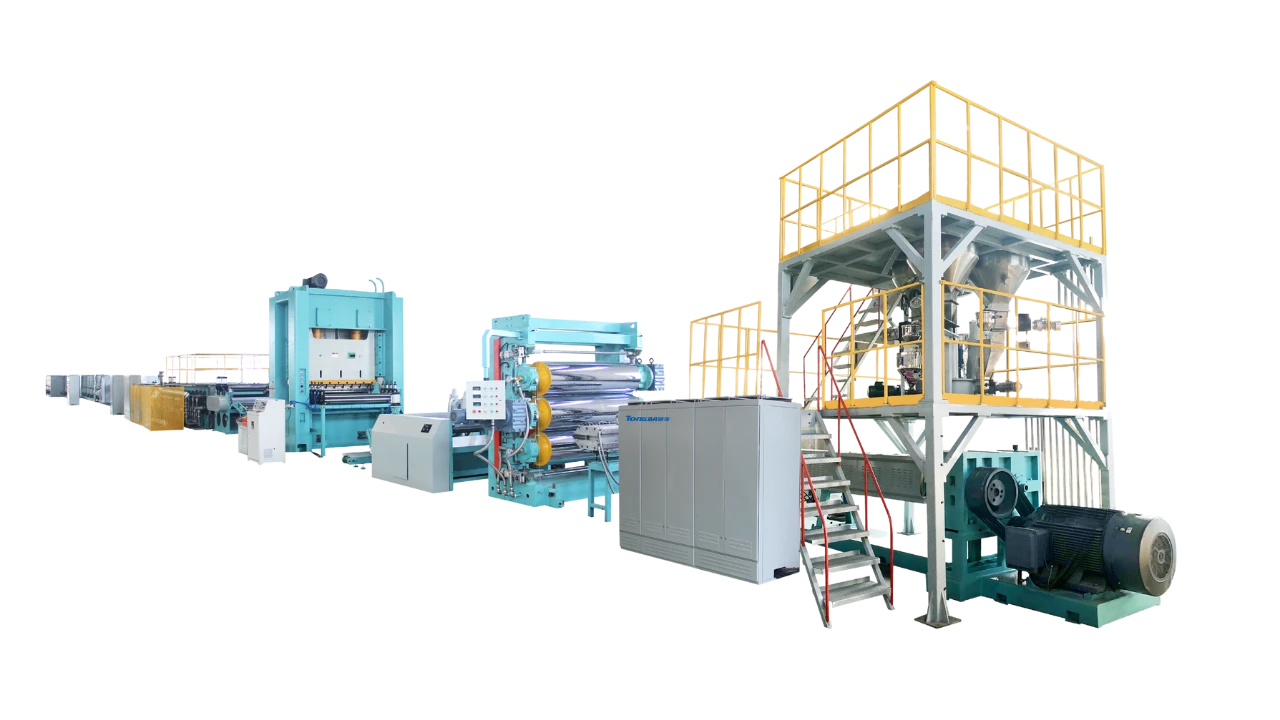
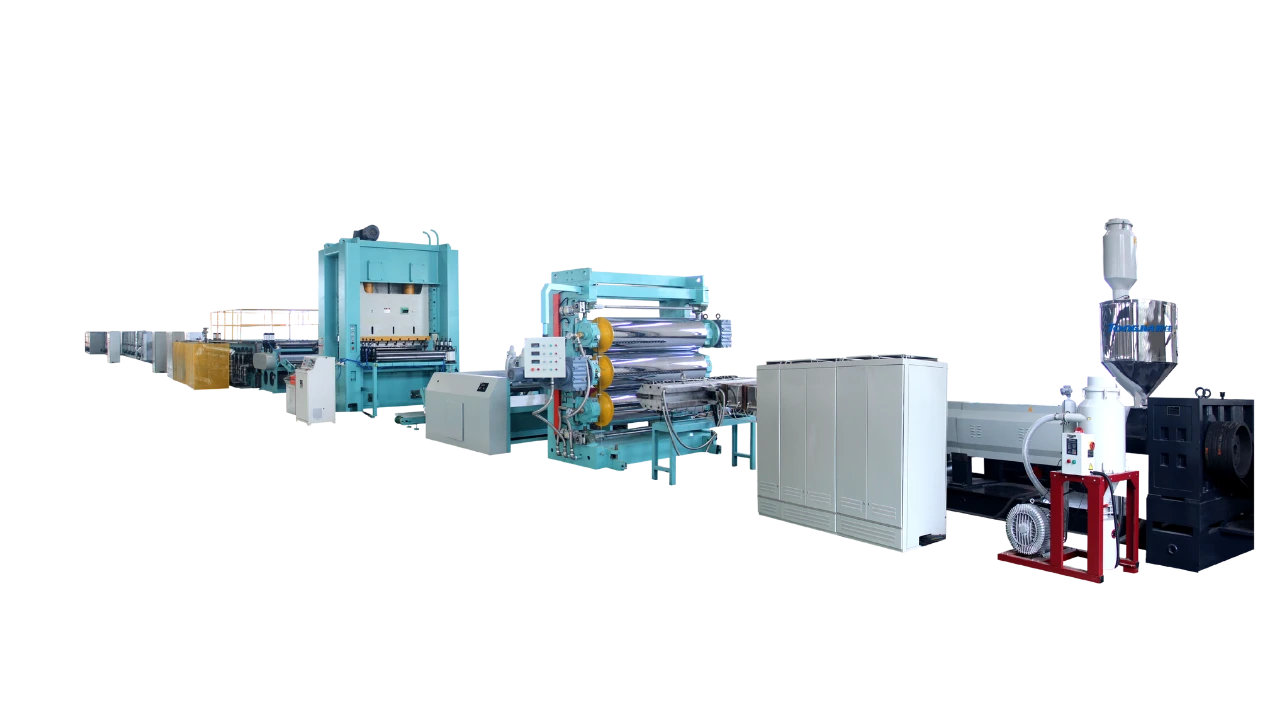
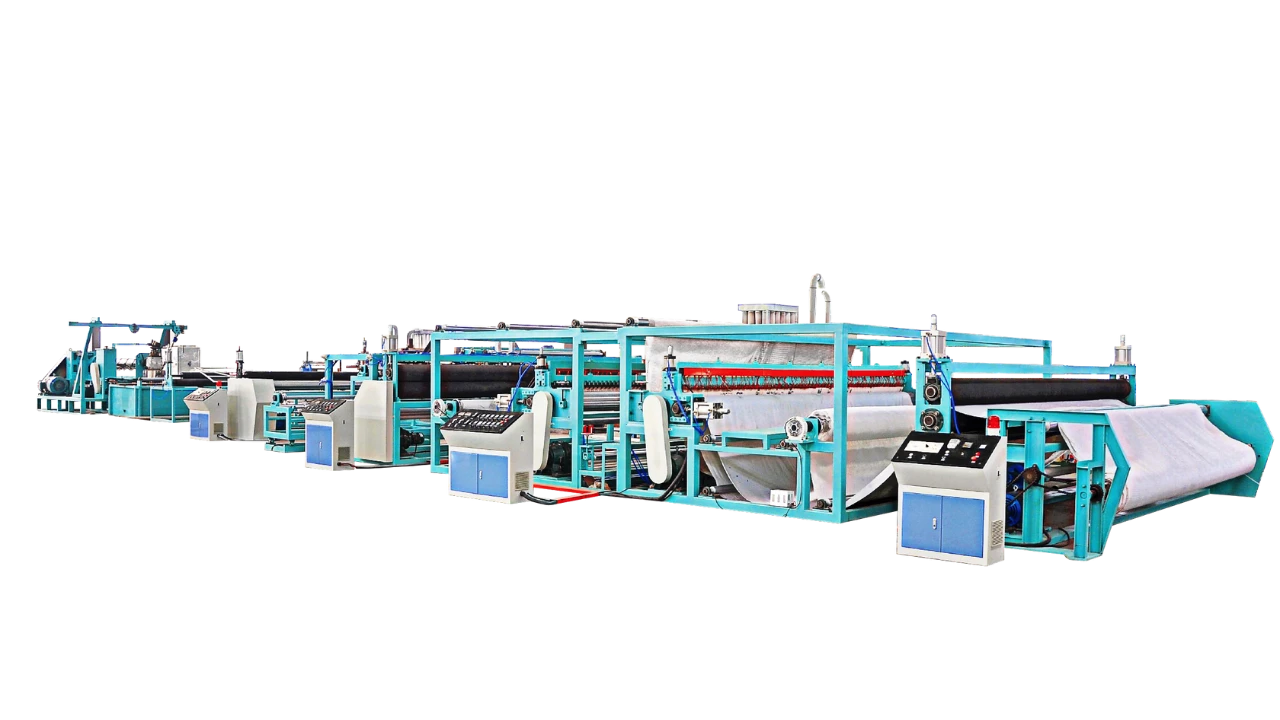
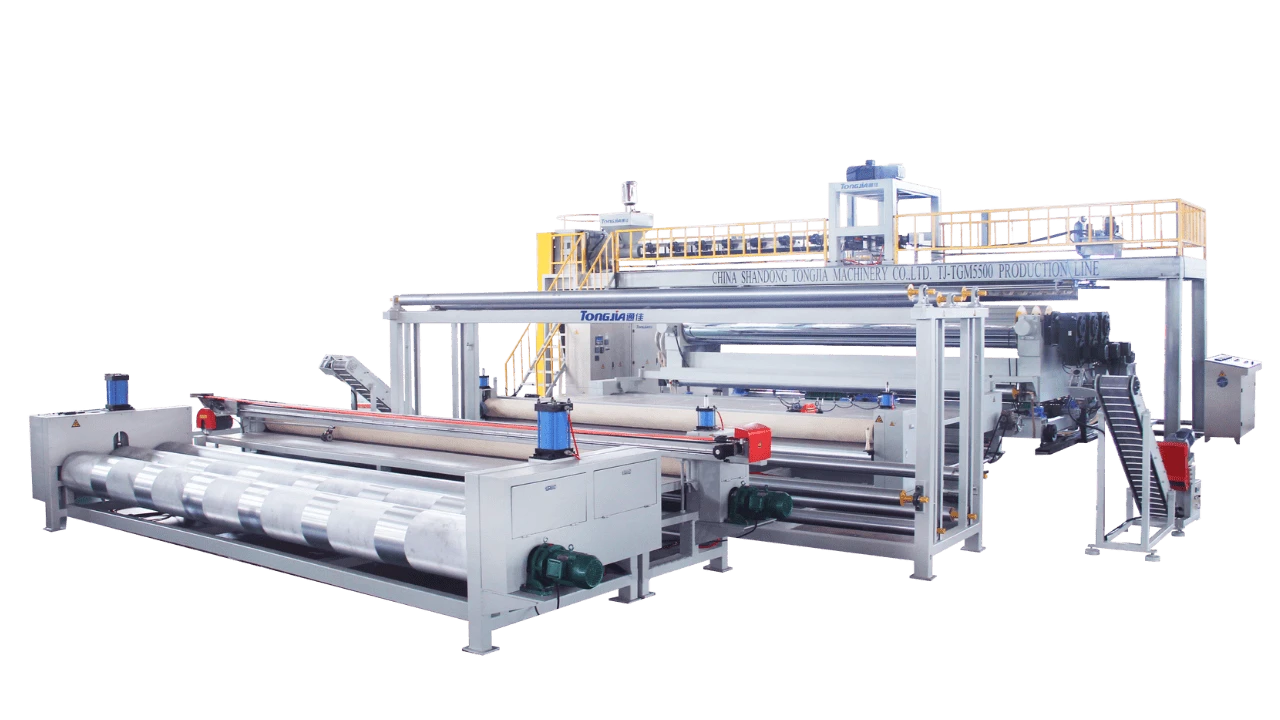
The Tongjia PP/PE biaxial geogrid production line makes flat polymer geogrids by extruding a sheet of PP or PE, punching a matrix of holes through it, then stretching the punched sheet in two perpendicular directions. That biaxial stretching step orients the polymer molecules along and across the grid at the same time, so the finished grid has near-equal tensile strength in both directions.
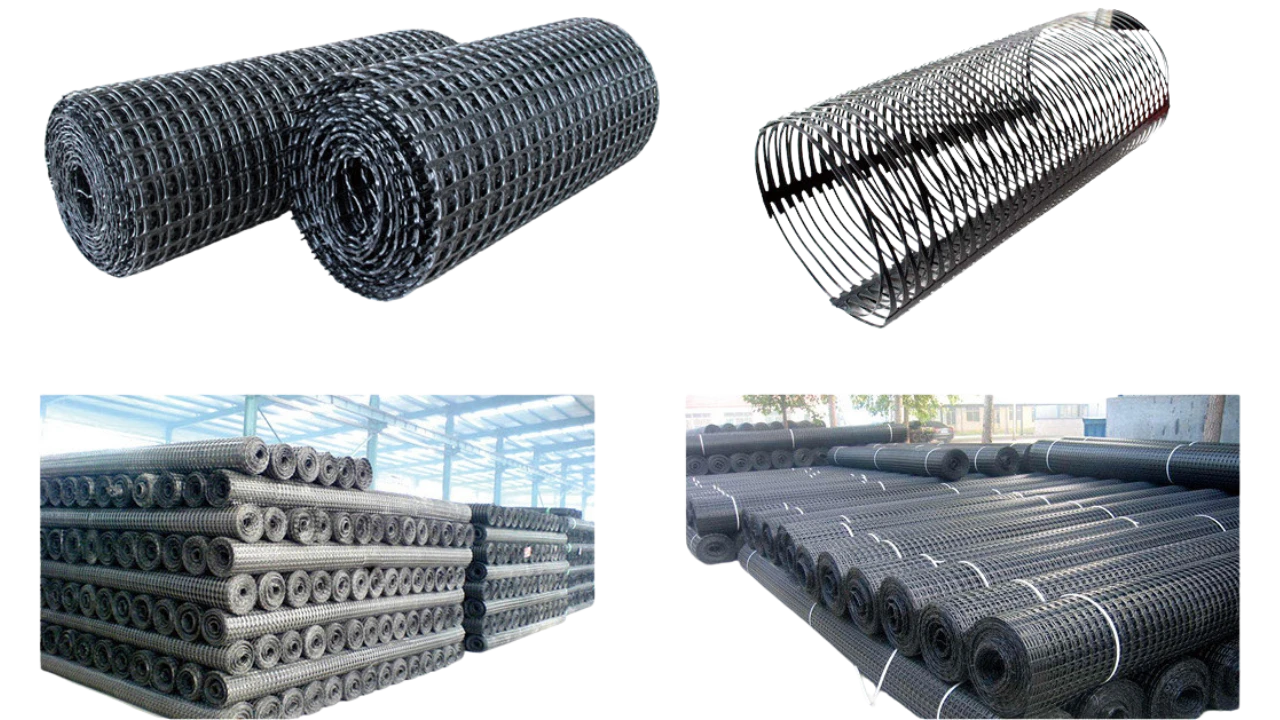
The output is a dimensionally stable, rot-resistant geogrid that goes by several names depending on the buyer. Engineers specify it as biaxial geogrid, biaxial geosynthetic or BX geogrid. Contractors and traders call it PP geogrid, plastic geogrid, ground reinforcement grid or simply geogrid mesh. If you searched for any of those terms, this is the machine that makes it.
Built for manufacturers who want to make geogrid in-house
This production line is aimed at companies that want to produce and sell geogrids rather than buy finished rolls: geosynthetics manufacturers adding biaxial geogrid to an existing range, polymer and plastics processors diversifying into geotechnical materials, and infrastructure material suppliers who want captive supply for highway and rail projects. Two line sizes cover most plant needs: the TJ-TGGS4000 at 4,000 mm finished width for mid-scale production, and the TJ-TGGS6000 at 6,000 mm for larger-format output.
Biaxial geogrid vs steel mesh and uniaxial grid
Biaxial PP/PE geogrid has replaced steel reinforcement mesh and uniaxial grid in road, rail and embankment applications across India for reasons that are straightforward once you look at the material properties:
- Against steel mesh: PP and PE do not corrode, which removes the rusting failure mode that affects buried steel mesh under highway and railway subgrade. Geogrid is lighter to handle and ship, requires no cutting or welding on site, and stays flexible in cold weather.
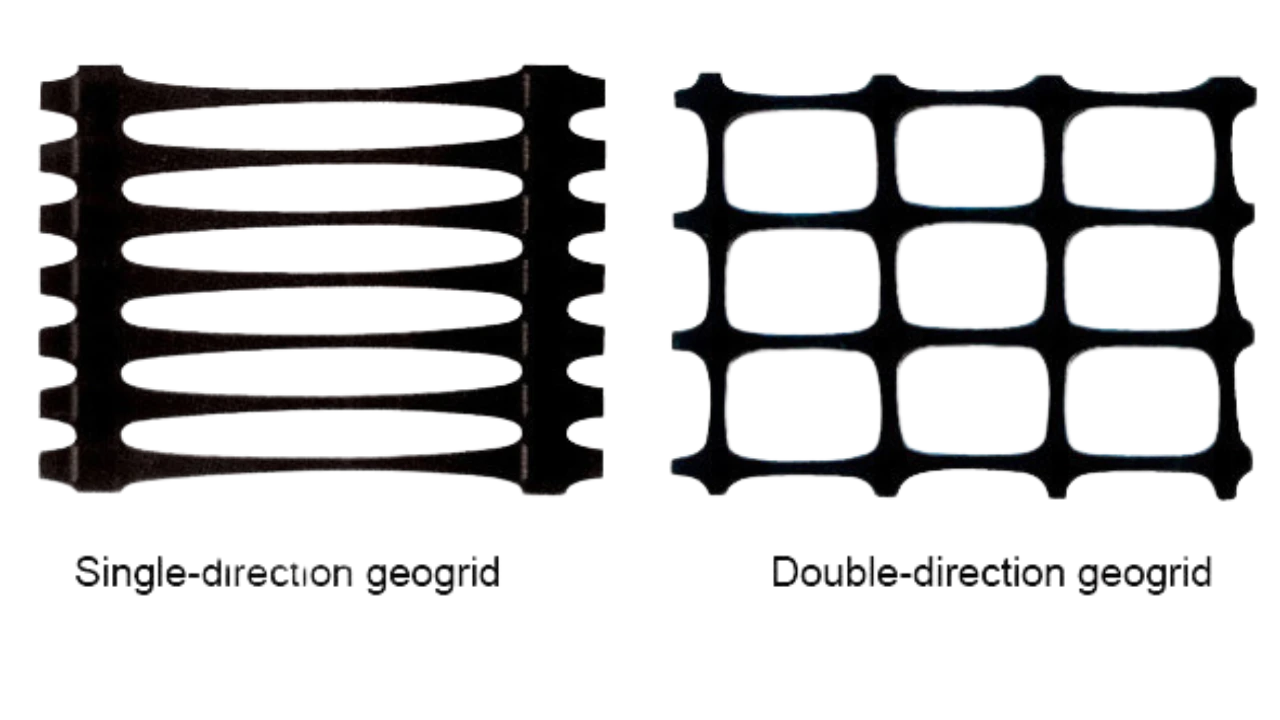
- Against uniaxial geogrid: Biaxial grid carries load in both directions, which makes it the right choice for subbase reinforcement under pavements, unpaved roads and working platforms where wheel loads can arrive from any direction.
Tensile strength runs from 15-15 kN/m up to 50-50 kN/m in both grid directions, so the same line serves light pavement reinforcement and heavily loaded industrial floors.
Industries that use biaxial geogrids in India
Geogrids made on this line serve the civil and geo-textile sector across India:
- Highways and expressways: subbase reinforcement, pavement crack control and subgrade stabilisation under new road construction and road widening projects.
- Railways and metro rail: trackbed reinforcement and embankment stabilisation under railway and metro projects.
- Airport runways and taxiways: subbase and subgrade reinforcement under heavy wheel loads.
- Retaining walls: mechanical stabilisation of earth retaining structures on highway, rail and urban slopes.
- Soft ground and slope reinforcement: improving load-bearing capacity on weak subsoil and preventing slope erosion.
- Underground coal mining: geogrid netting for tunnel roof and false-top reinforcement in underground workings.
- Working platforms and haul roads: temporary or permanent pavement reinforcement on construction sites and mine access roads.
Why source this line through Magnum
Magnum is the authorised India partner for Tongjia geogrid machinery. One team manages the whole supply chain: sizing the line for your output targets and site conditions, the import and customs clearance, installation on your floor with OEM-backed engineers, and operator training at start-up. Spares and technical support run through the same contact afterwards, not a separate party.
If you are evaluating a biaxial geogrid production line or a PP/PE geogrid manufacturing machine for an Indian plant, talk to our engineers. We will size the right model to your target widths and tensile spec, and give you a realistic lead time with a fully configured quotation.
Built For
Who this geogrid production line is built for in India
Make PP or PE biaxial geogrids in-house, whether you supply to road and rail contractors, produce geosynthetics, or run mining operations that need cost-controlled grid supply. Find your fit below.
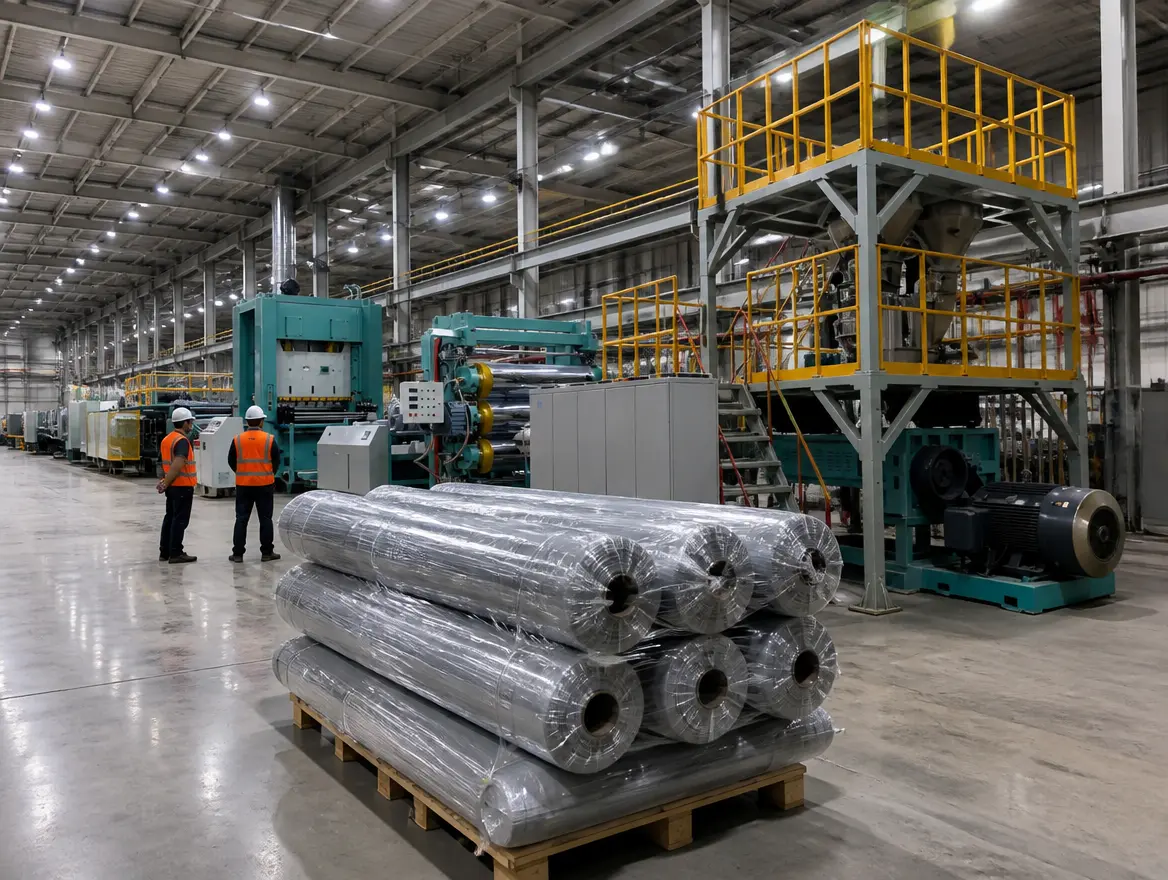
Geogrid & Geosynthetics Manufacturers
Make PP or PE biaxial geogrid in-house and sell it to road contractors, government project suppliers and civil sub-contractors acr...
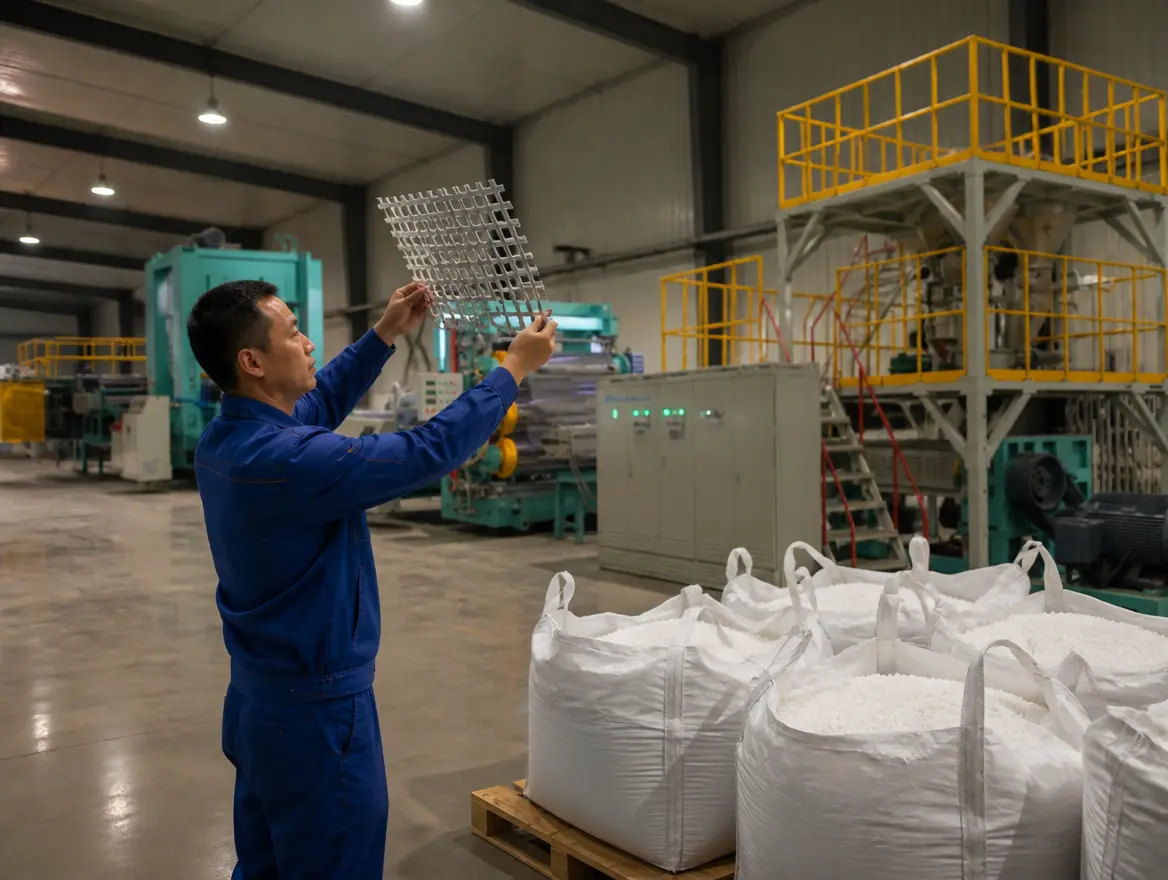
Polymer & Plastics Converters
Already run PP or PE extrusion? Add a biaxial geogrid line to your plant and enter the fast-growing geosynthetics market with mini...
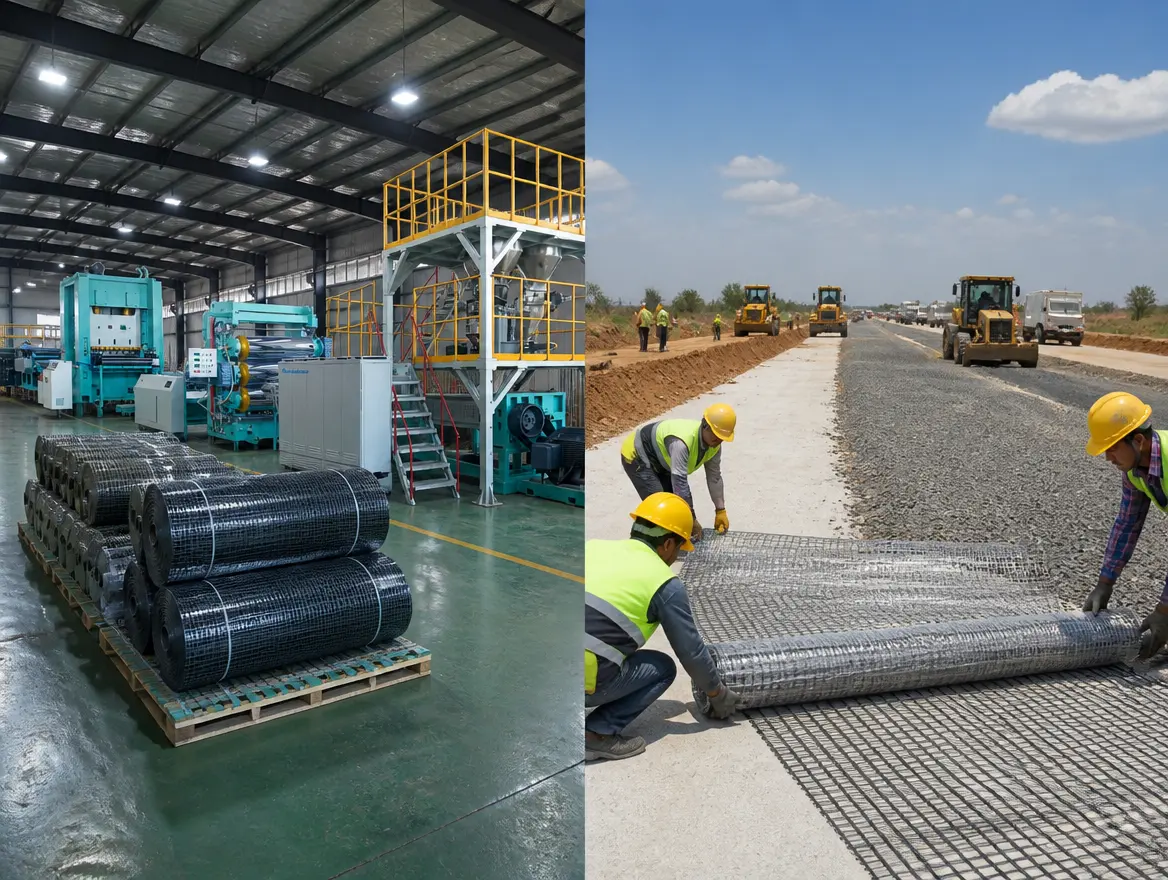
Infrastructure Material Suppliers
Supply biaxial geogrid to highway, expressway and metro rail contractors from your own production, instead of sourcing finished ro...
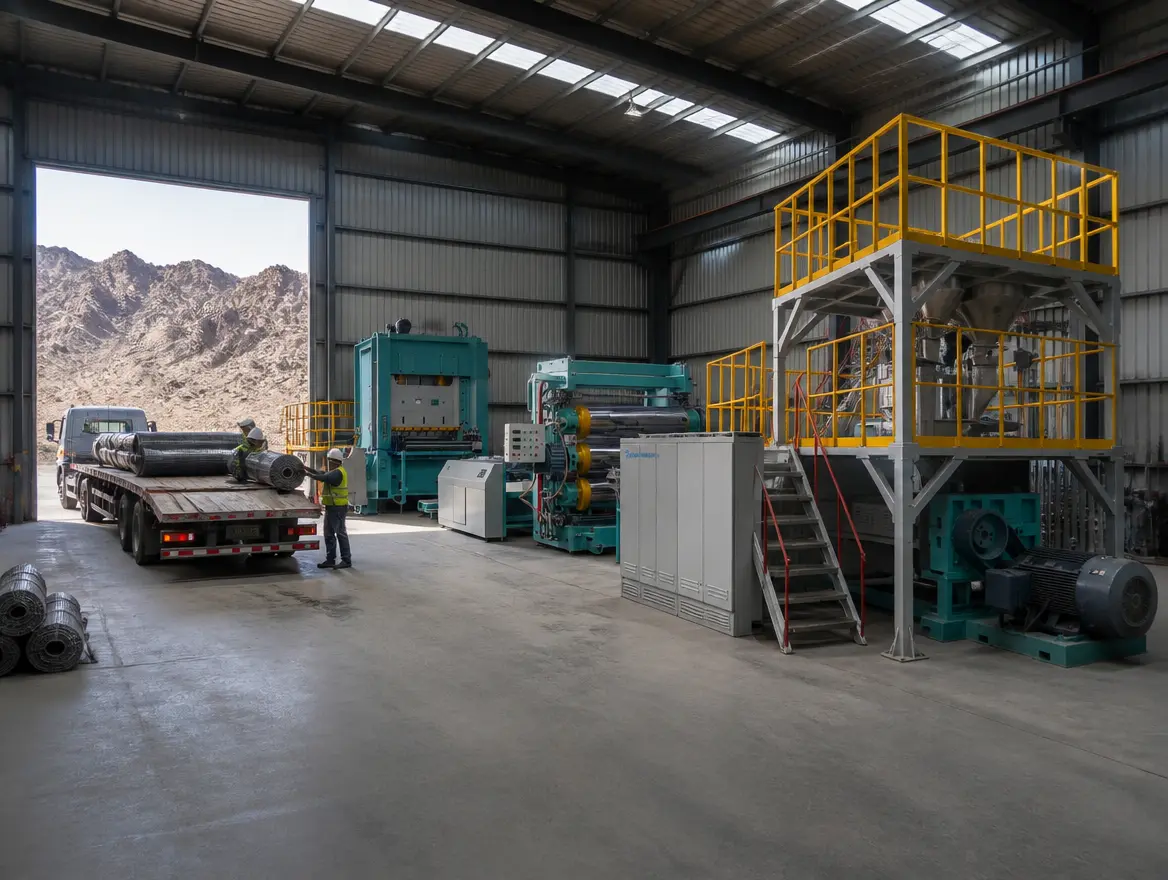
Underground Mining Operations
Produce geogrid safety netting for underground coal mine tunnel roofing in-house, controlling supply and specification for your ow...
Specifications
Technical data
Specifications are supplied by the manufacturer. Custom configurations available. Speak to our engineers.
Request Full DatasheetModel TJ-TGGS4000 (4,000 mm Line)
Extruder Size
Ø150/33
Screw Diameter
Ø150 mm
Die Head Width
1,450 mm
Punch Press Force
1,100 kN
Single-Direction Grid Width
1,200 mm
Double-Direction Grid Width
4,000 mm
Machine Footprint (L×W×H)
98 × 12 × 4.8 m
Model TJ-TGGS6000 (6,000 mm Line)
Extruder Size
Ø180/33
Screw Diameter
Ø180 mm
Die Head Width
2,000 mm
Punch Press Force
3,150 kN
Single-Direction Grid Width
2,000 mm
Double-Direction Grid Width
6,000 mm
Machine Footprint (L×W×H)
110 × 15 × 5.2 m
Product Output (Both Models)
Tensile Strength Range
15-15 to 50-50 kN/m (both directions)
Grid Type
Biaxial (equal strength in MD and TD)
Raw Material
PP (polypropylene) or PE (polyethylene)
Process Sequence
Extrusion → Punching → MD Stretching → TD Stretching
Return on Investment
What this machine saves you
The numbers Indian manufacturers use to justify the CAPEX internally.
Up to 6,000 mm
Finished Grid Width
The TJ-TGGS6000 produces grid up to 6,000 mm wide, covering a wider strip per pass and reducing the number of joints in road and embankment installation.
Equal
Strength Both Directions
Biaxial stretching gives the grid the same tensile performance along and across its width, so it reinforces subgrade evenly under loads arriving from any direction.
In-House
Geogrid Supply
Bring geogrid production on-site instead of buying finished rolls from traders, and control your specifications, lead time and cost per square metre.
Complete Package
What's included with every machine
From factory to running on your floor, Magnum handles it end to end.
The Production Line
Factory-tested at the Tongjia OEM plant before dispatch
Import & Customs
Sea freight and customs clearance to your site, handled by Magnum
Installation & Setup
Coordinated by Magnum with OEM-backed engineers
Operator Training
On-site run-in and operator training at start-up
Factory-Supplied Spares
Wear parts sourced to order from the Tongjia OEM
Technical Support
Remote and OEM-backed support after start-up
Buying Through Magnum
One accountable partner, end to end
Magnum is the authorised India partner for Tongjia geogrid machinery. We size the line with the factory for your output targets, manage import and customs, install it on your floor with OEM-backed engineers and train your operators at start-up. Wear parts and technical support run through the same contact afterwards.
Authorised India Partner
A direct link to the Tongjia factory for specification, pricing and engineering support.
One Point of Accountability
A single team for sourcing, import, customs, installation and training.
On-Site Installation & Training
Factory-backed engineers install the line and train your operators in person.
Factory-Supplied Spares
Genuine wear parts sourced directly from the Tongjia manufacturer.
Key Features
Engineering deep-dive
For maintenance teams and production engineers who want to look under the hood.
Two line sizes: 4,000 mm or 6,000 mm double-direction finished grid width
Heavy punch press at 1,100 kN (TJ-TGGS4000) or 3,150 kN (TJ-TGGS6000) for clean, uniform apertures
Tensile strength range from 15-15 to 50-50 kN/m in both grid directions
Compatible with PP (polypropylene) and PE (polyethylene) raw materials
Rot-resistant, dimensionally stable grid for roads, rail embankments, retaining structures and mine tunnels
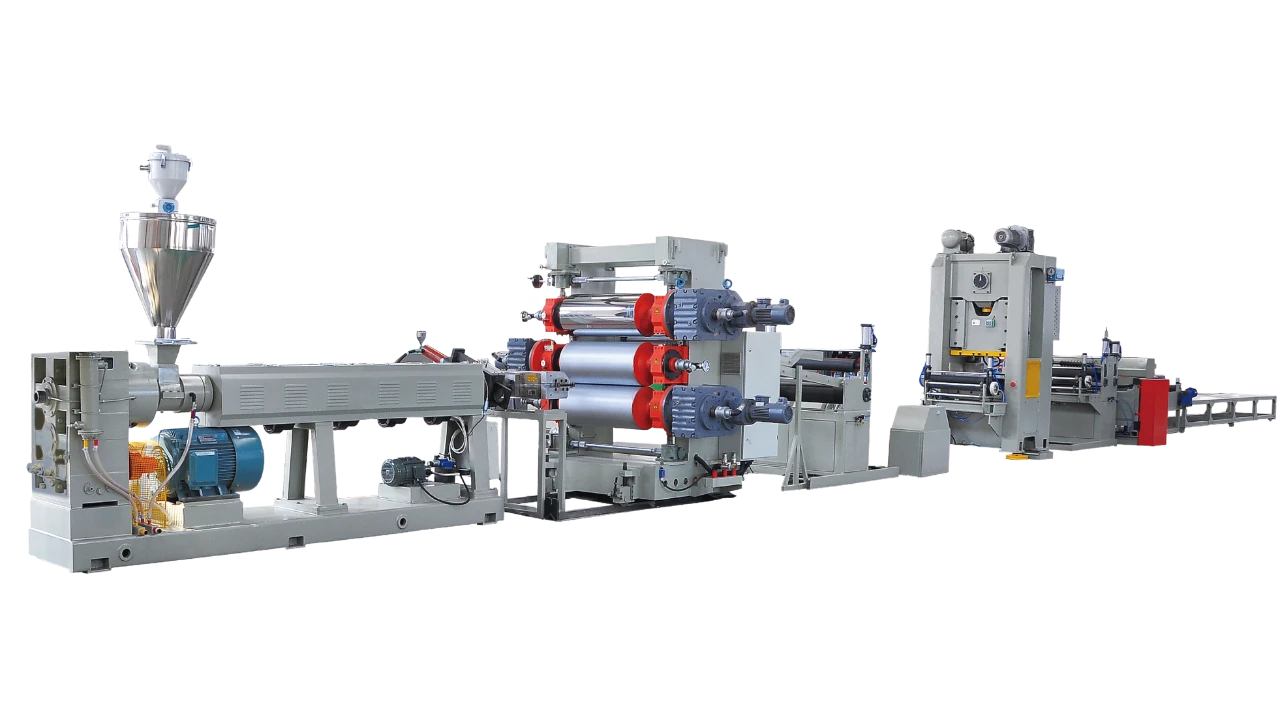
Four-step production process: extrusion, punching, machine-direction stretching, transverse stretching
Supplied, imported, installed and supported across India by Magnum
Watch It Run
See it in action
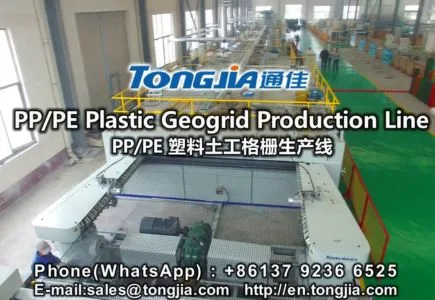
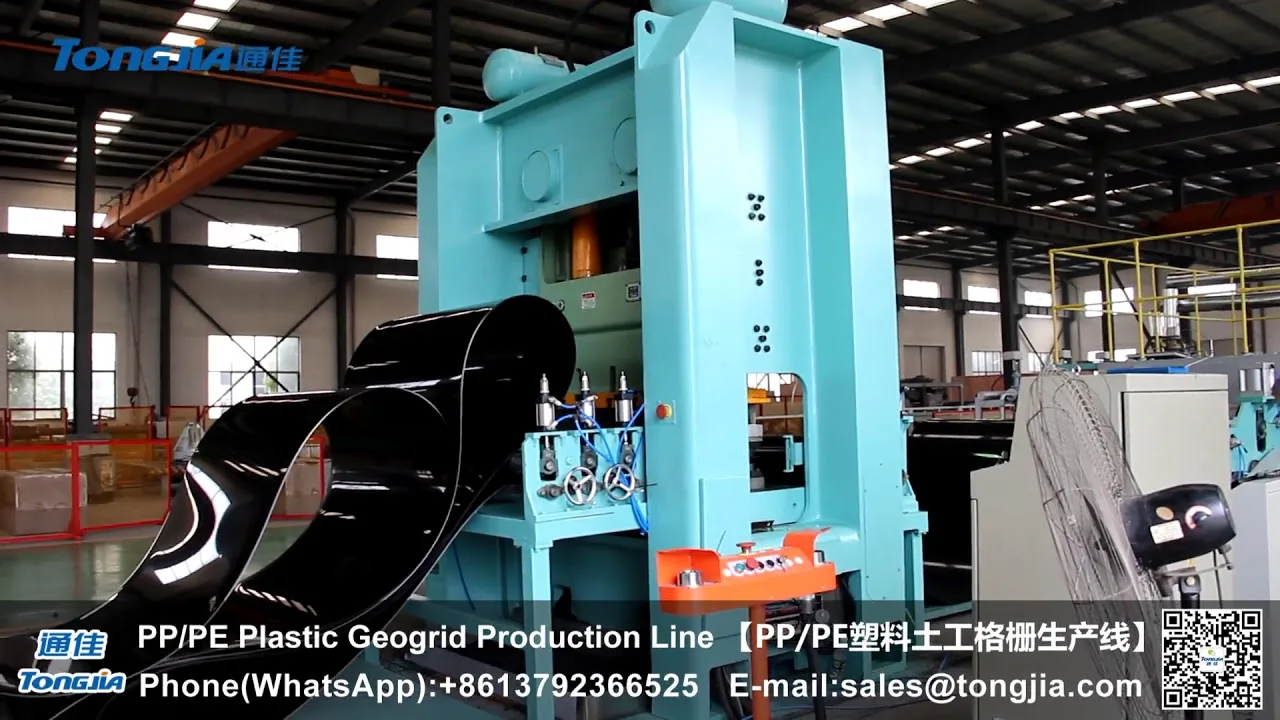
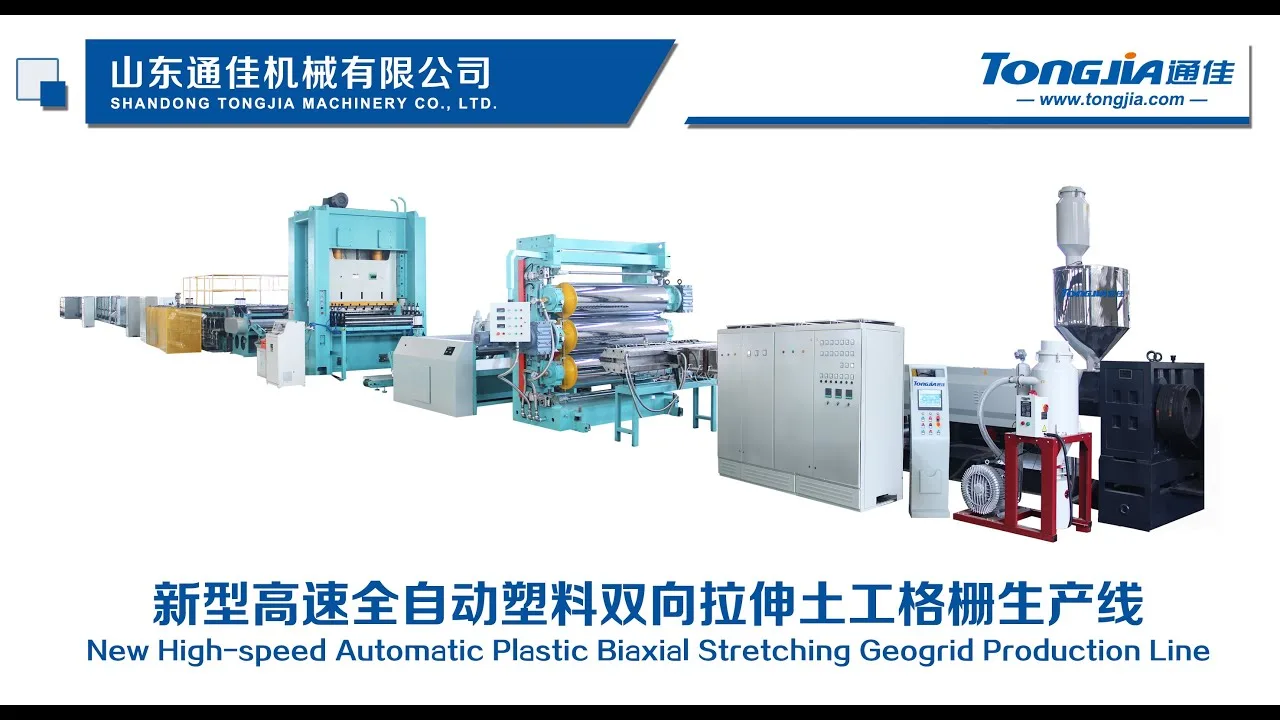
Real footage from OEM demonstrations and factory production trials.
Documentation
Technical downloads
Brochures, datasheets and guides, available on request.
FAQs
Questions Indian buyers ask us
Common questions Indian buyers ask us, answered upfront.
A biaxial geogrid is a flat polymer grid that carries near-equal tensile load in both directions, unlike uniaxial grid which is strong mainly in one direction. This line makes biaxial geogrid by extruding a PP or PE sheet, punching a regular matrix of holes through it, then stretching the sheet first in the machine direction and then across its width. That two-direction stretching step orients the polymer chains simultaneously in both orientations, which is what gives the finished grid its equal-strength structure.
The TJ-TGGS4000 produces finished grid up to 4,000 mm wide; the TJ-TGGS6000 goes up to 6,000 mm. Wider output covers more ground per roll and reduces field joints during road or embankment installation. If you supply large highway or rail projects, or want wider rolls to stand out in a commodity market, the TJ-TGGS6000 is the better fit. For general-purpose production or a first geogrid line, the TJ-TGGS4000 is a practical starting point.
This line suits geosynthetics manufacturers adding biaxial geogrid to their product range, polymer and plastics processors diversifying into geotechnical materials, and infrastructure material suppliers who want captive geogrid supply for highway or rail projects. Underground coal mine operators who use geogrid for tunnel roof safety are also buyers in some cases. It is aimed at companies that want to make and sell geogrid, not at contractors who use it on site.
The line covers tensile strengths from 15-15 to 50-50 kN/m in both grid directions. Lower grades (15-15 to 20-20 kN/m) suit light pavement reinforcement and separation layers. Mid-range grades (30-30 to 40-40 kN/m) are specified for road subbase and embankment reinforcement. The highest grades (45-45 and 50-50 kN/m) are used on heavily loaded industrial floors, mine haul roads and retaining structures.
The line works with polypropylene (PP) or polyethylene (PE) polymer. PP is the standard choice for biaxial geogrid production in most civil applications, as it is stiffer and holds shape well under load. PE can be used where greater flexibility or chemical resistance is needed. Both produce a rot-resistant, corrosion-free grid that will not degrade underground the way buried steel mesh can.
Biaxial geogrid from this line is used across India's civil and infrastructure sector: highway and expressway subbase, railway trackbed and embankment, airport runway subbase, earth retaining walls, slope stabilization, soft ground improvement, and underground coal mine tunnel lining. Construction working platforms and mine haul roads also use biaxial grid for temporary or permanent pavement reinforcement.
Typical lead time is around 16 to 20 weeks: manufacture at the Tongjia plant, sea freight and customs clearance into India. Magnum manages the full chain from that point, including import documentation, site installation with OEM-backed engineers, and operator training at start-up. Wear parts and technical support stay with the same contact after the line is brought online.
This is a biaxial-only line. It stretches the punched sheet in both the machine direction and the transverse direction in the same production sequence, which is what creates the biaxial grid structure. Uniaxial geogrids require a different production setup where stretching is primarily in one direction only. If you need both biaxial and uniaxial geogrid production, mention this when you enquire so our engineers can advise on the right configuration.
Engagement options
Evaluate PP/PE Biaxial Geogrid Production Line on your terms
Capex decisions deserve a serious conversation. Pick the channel that fits your stage, whether you're specifying, validating or still scoping. Each one routes to the right person on our team within one business day.
Request a Quotation
Configured pricing with lead time, installation, spares and AMC. Detailed proposal in one business day.
Application Engineer Call
30-minute technical review of throughput, substrate compatibility and integration with your existing line.
WhatsApp the Sales Desk
Fastest channel for spec sheets, brochures and quick clarifications. Replies during business hours.
See the Machine Running
Arrange a factory demonstration or a recorded run of this machine on your material.
Enquire
Talk to a Magnum specialist
Tell us about your production line and what you're trying to achieve. We'll come back within one business day with pricing, lead time and any technical questions answered.