
Authorised India Distributor
Geomembrane Production Line (PE, PVC, TPO, EPDM)
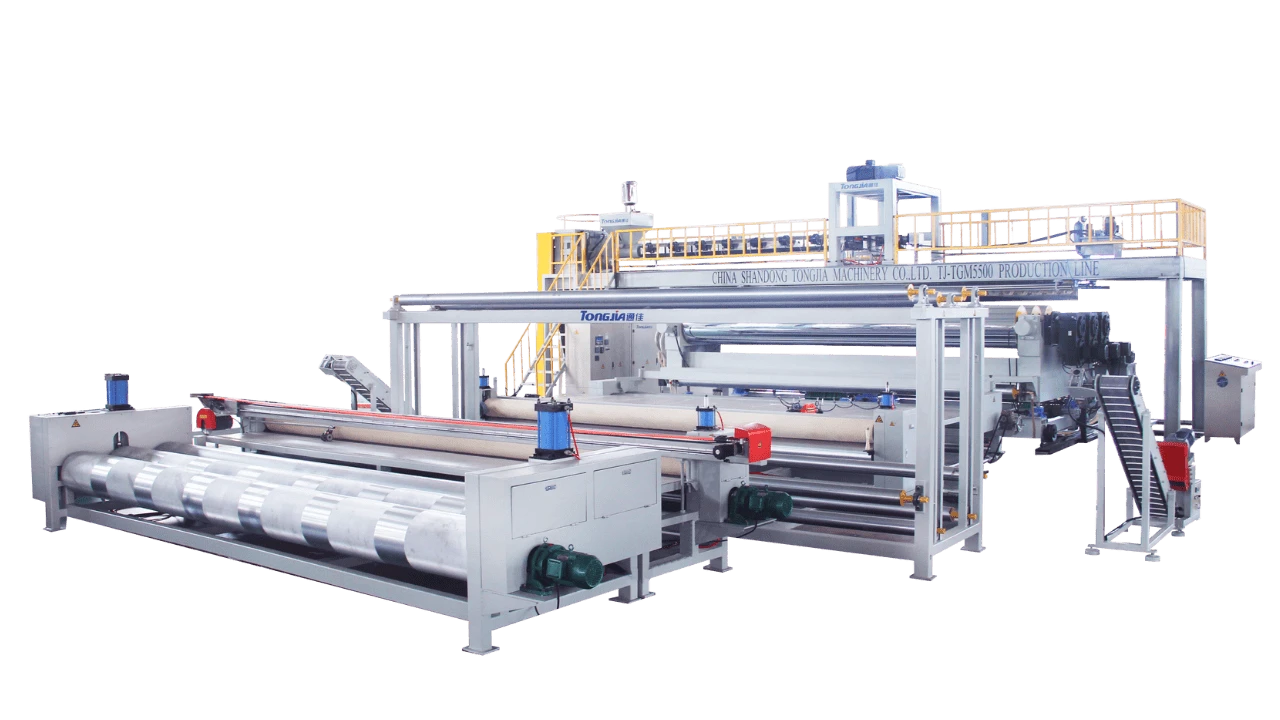
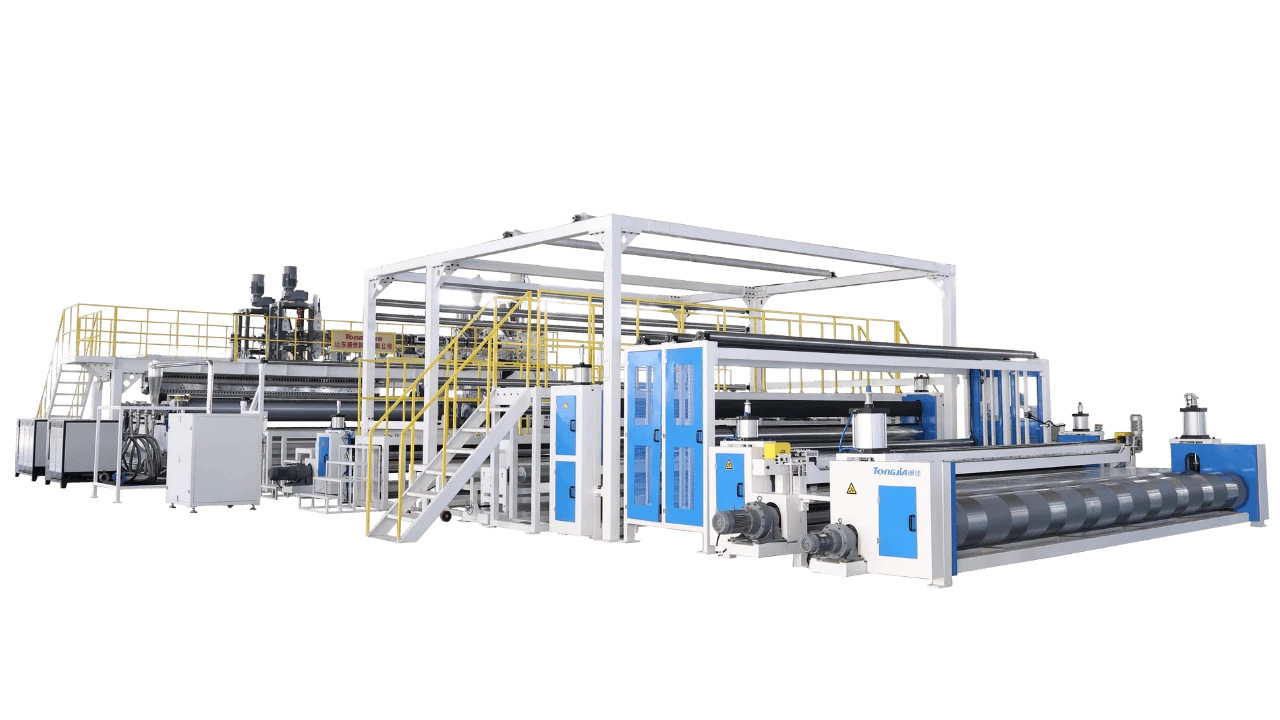
Produce HDPE, PVC, TPO and EPDM geomembranes in-house, in widths from 3 to 8 m and output up to 1,500 kg/h. The Tongjia geomembrane production line is supplied, installed and supported across India by Magnum.
8,000 mm
Max Membrane Width
1,500 kg/h
Max Output Rate
4 Materials
PE, PVC, TPO, EPDM
China
Country of Origin
16-20 weeks
Typical Lead Time
OEM Certified
Build Standard
Factory-Backed
Install & Training
Overview
About this machine
What the Tongjia geomembrane line produces
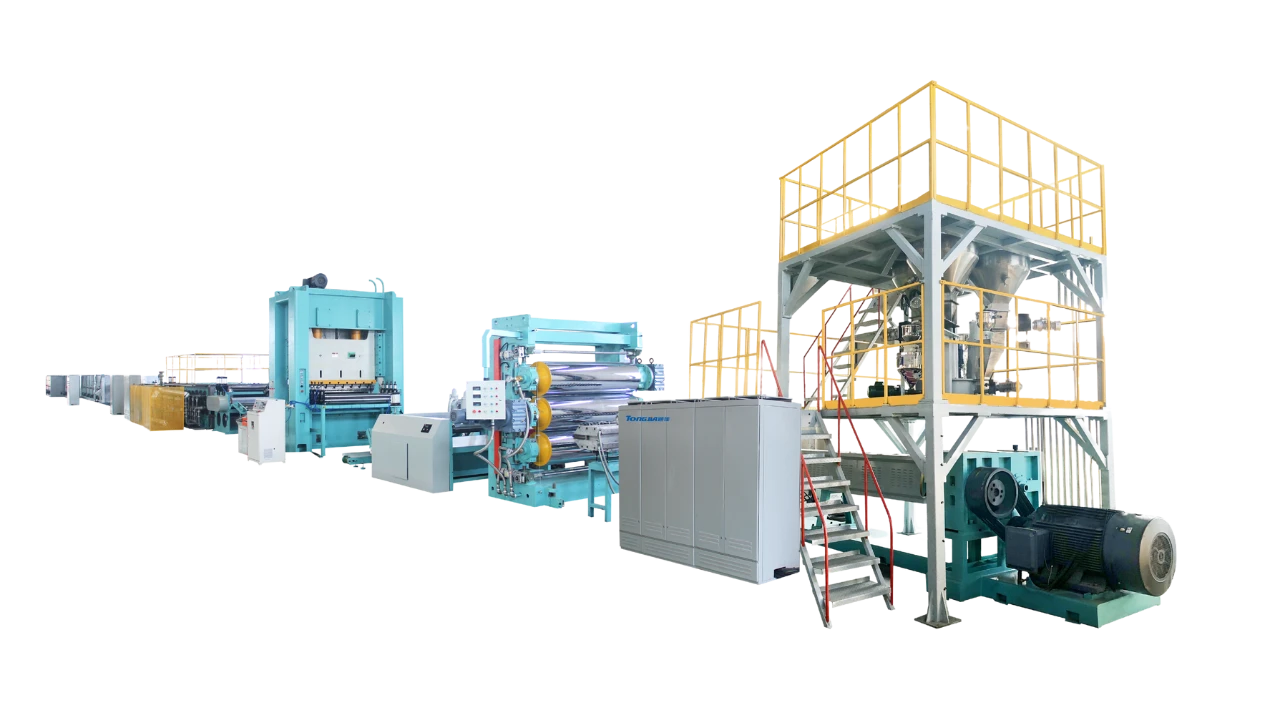
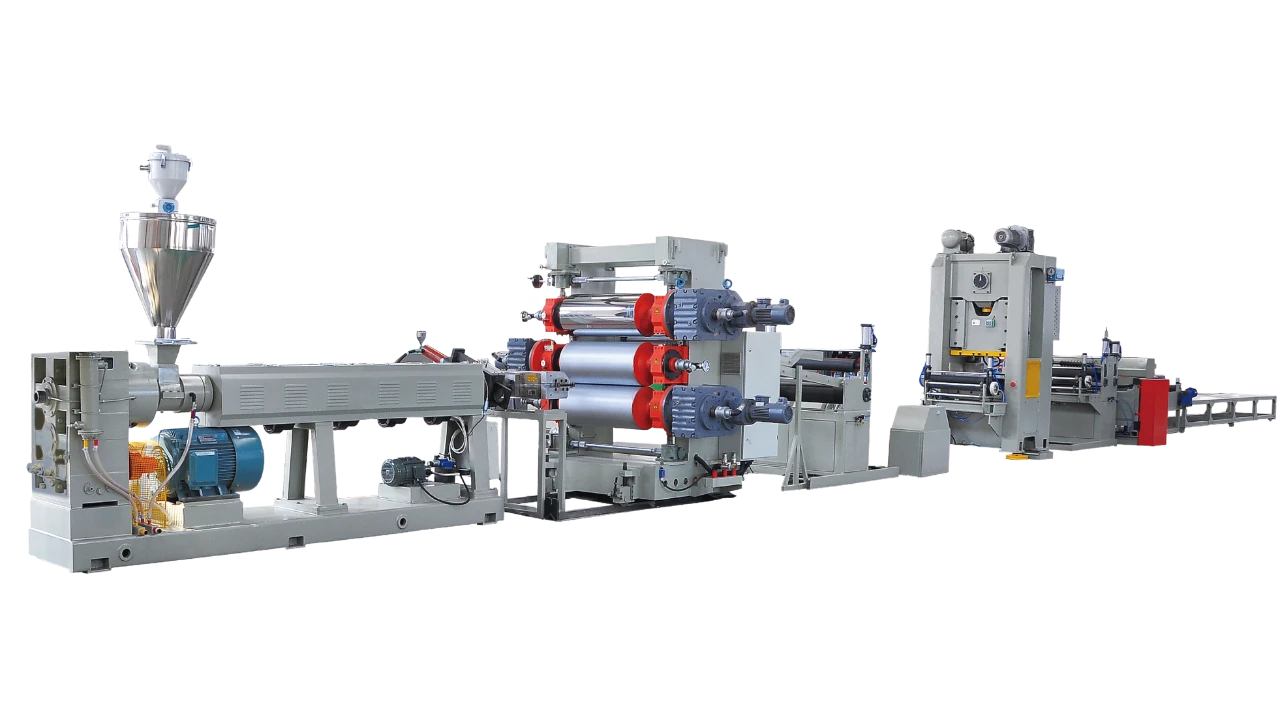
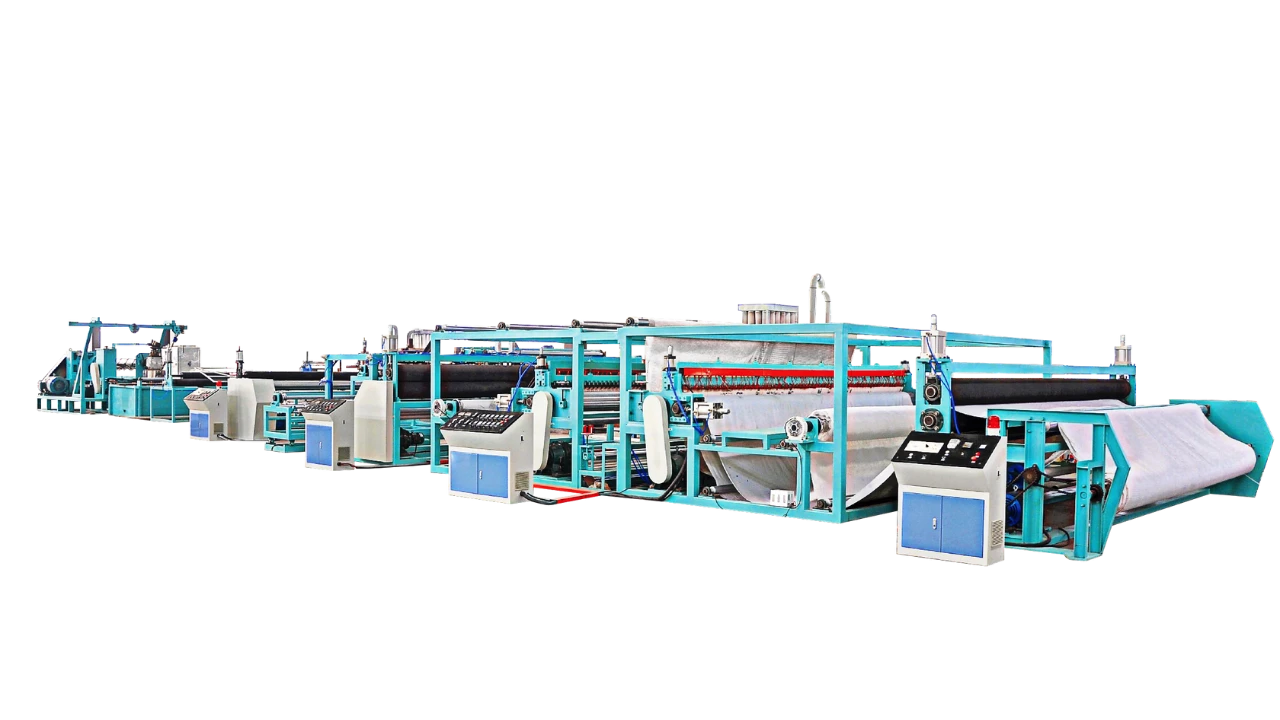
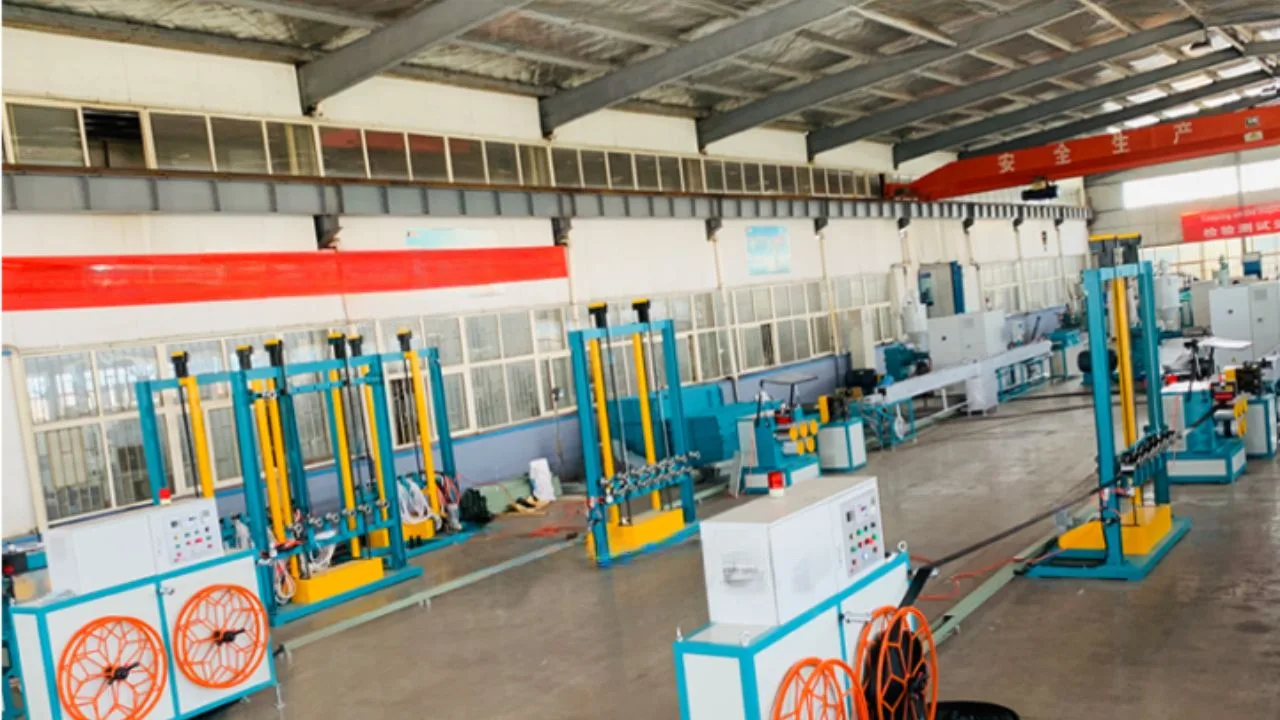
The Tongjia geomembrane production line is an extrusion line that produces impermeable waterproof membranes from PE (HDPE, LDPE, LLDPE), PVC, TPO and EPDM polymers. Five model sizes cover membrane widths from 3,000 mm to 8,000 mm, with thickness adjustable from 0.7 to 3 mm and output ranging from 300 to 1,500 kg/h depending on model and material.
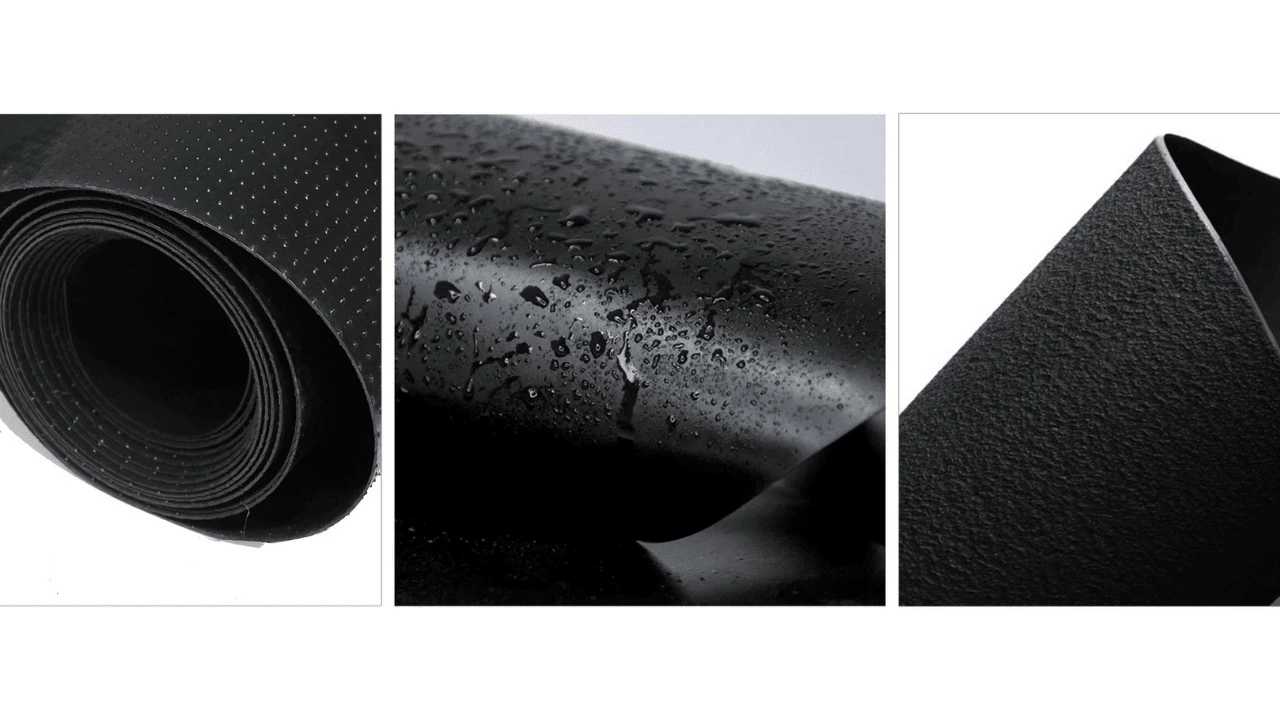
The finished product goes by many names depending on the buyer and application. Civil engineers specify it as geomembrane, HDPE liner or geosynthetic liner. Waterproofing contractors call it waterproof membrane, pond liner or roofing membrane. Municipal and environmental buyers refer to it as landfill liner, canal liner or impermeable sheet. If you searched for any of those terms, this is the machine that produces them.
Built for manufacturers who want to produce geomembrane in-house
This line suits companies that want to make and sell geomembrane: geosynthetics producers adding geomembrane to an existing geocell, geogrid or geotextile range; PVC or PE polymer processors diversifying into waterproofing materials; and civil material suppliers who want captive supply for large reservoir, canal or landfill contracts. Dedicated waterproofing applicators running large-scale landfill or mining liner projects also become buyers when their consumption justifies in-house production.
The five model sizes let a first-time producer start with the TJ-TGM3000 at 3,000 mm width and step up to the TJ-TGM8000 at 8,000 mm as the business grows. All five share the same 33:1 L/D screw ratio and intelligent control architecture, so operators move between models with minimal retraining.
Geomembrane vs concrete, clay and bitumen
PE, PVC, TPO and EPDM geomembranes have displaced concrete, compacted clay and bitumen liners in India across a wide range of applications. The reasons come down to material properties and installation cost:
- Against concrete lining: Geomembrane is far cheaper and faster to install. A rolled membrane lays in hours; a concrete lining takes days or weeks. Concrete cracks under ground movement; flexible geomembrane accommodates settlement without losing seal integrity.
- Against compacted clay: Clay liners require large volumes of suitable material and careful placement. They desiccate and crack in dry conditions. HDPE and LLDPE geomembranes deliver consistent impermeability at a fraction of the weight and bulk, without needing a suitable clay source nearby.
- Against bitumen: Bitumen membrane degrades under UV and in sustained contact with water. PE geomembrane is chemically inert, UV-stabilised and maintains its seal under long-term submersion, which is why it is specified over bitumen for landfills, reservoirs and sewage ponds.
Industries that use geomembranes in India
Geomembrane from this line serves almost every sector that needs waterproofing, containment or lining:
- Waste management and environmental: landfill base and cap liners, leachate collection ponds, hazardous waste containment, hospital solid waste disposal.
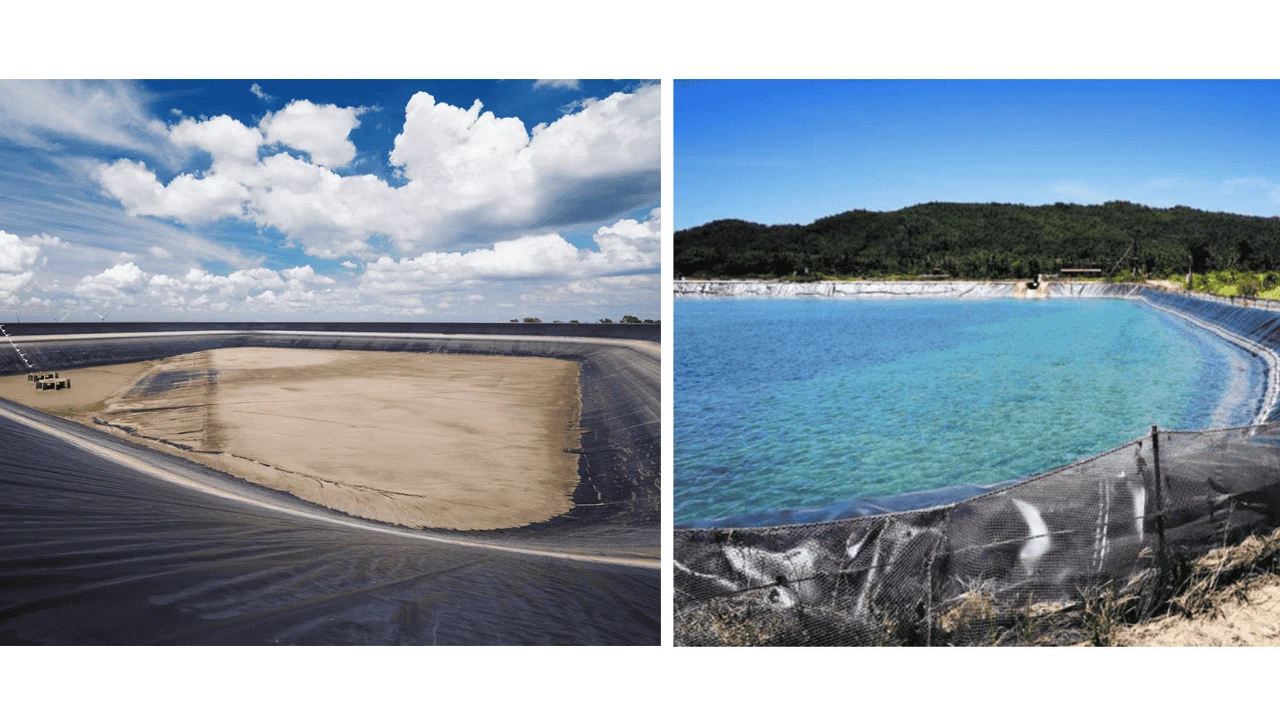
- Water conservancy and irrigation: reservoir liners, canal liners, water storage tanks, irrigation pond bases and check dams.
- Sewage and effluent treatment: effluent treatment ponds, sewage treatment plants, power plant ash ponds, industrial wastewater storage.
- Mining: heap-leach pads, tailings impoundment, process water containment, mine pit liners and solution ponds.
- Construction and civil: tunnel waterproofing, metro and underground station lining, basement waterproofing, bridge deck waterproofing.
- Roofing and landscaping: planted and garden roofs, artificial lakes, golf course pond bottoms, decorative water features.
- Aquaculture and agriculture: fish pond and shrimp farm liners, biogas digesters, farm storage ponds.
Why source this line through Magnum
Magnum is the authorised India partner for Tongjia geomembrane machinery. One team handles the whole chain: sizing the line for your target materials, widths and output rate, managing import and customs clearance, installing the line on your floor with OEM-backed engineers, and running your operators through start-up training. Wear parts and technical support stay with the same contact afterwards.
If you are evaluating a geomembrane production line or a waterproof membrane extrusion line for an Indian plant, talk to our engineers about your target materials, production targets and site layout. We will give you an honest lead time and a fully configured quotation.
Built For
Who this geomembrane production line is built for in India
Produce PE, PVC, TPO or EPDM geomembranes and waterproof membranes in-house, whether you supply to landfill, reservoir and civil contractors, process polymers into waterproofing materials, or serve the mining and industrial effluent market. Find your fit below.
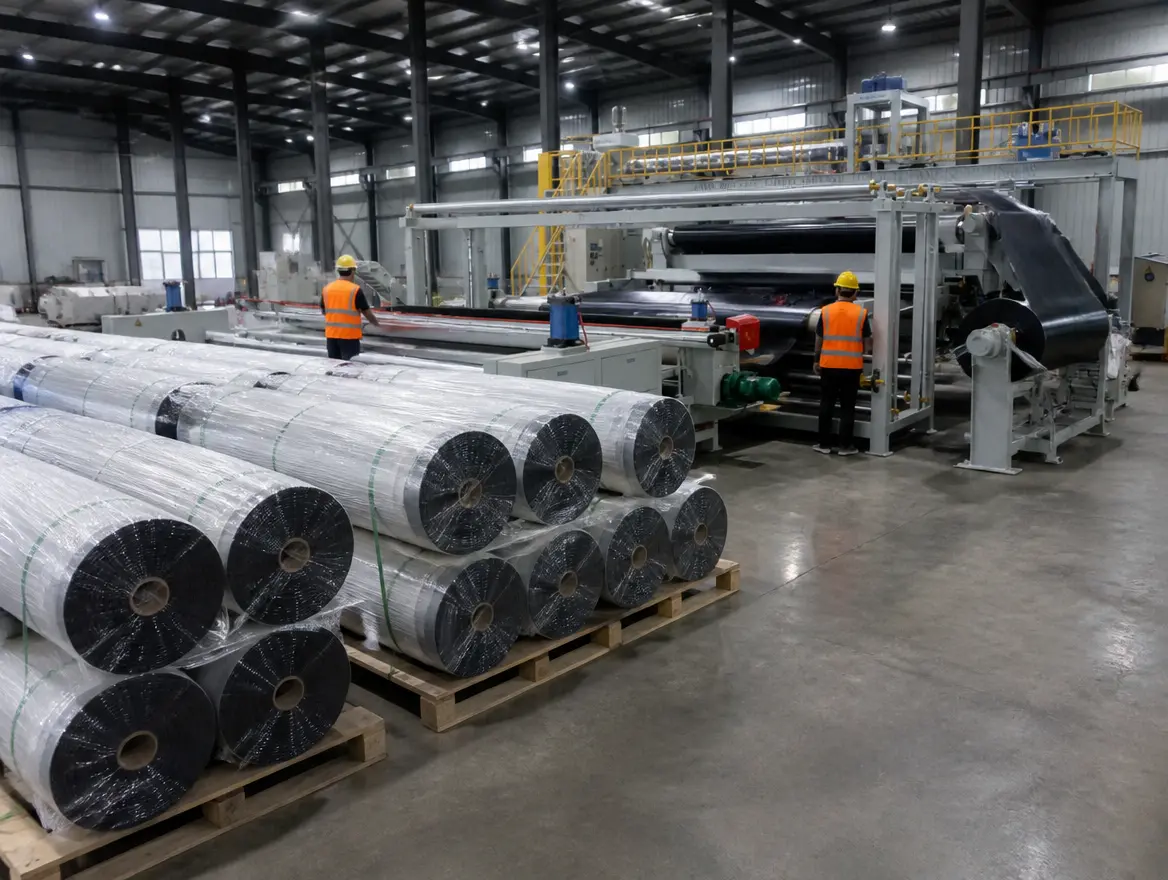
Geosynthetics Producers Adding Geomembrane
Already making geocell, geogrid or geotextile? Add a geomembrane line and sell HDPE, PVC or TPO liner rolls into the same civil co...
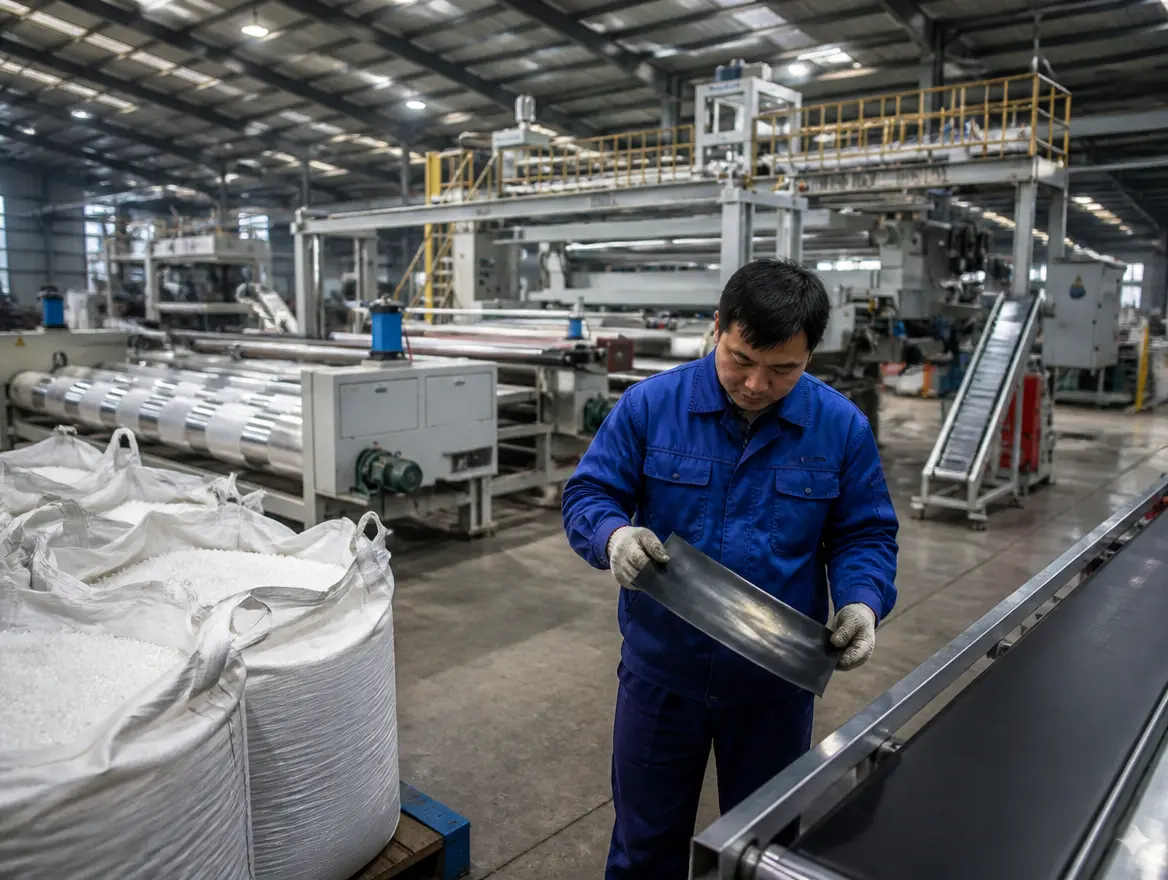
Polymer Processors Entering Waterproofing
PE or PVC processing plant with spare capacity? The geomembrane line uses the same raw materials and produces a finished roll prod...
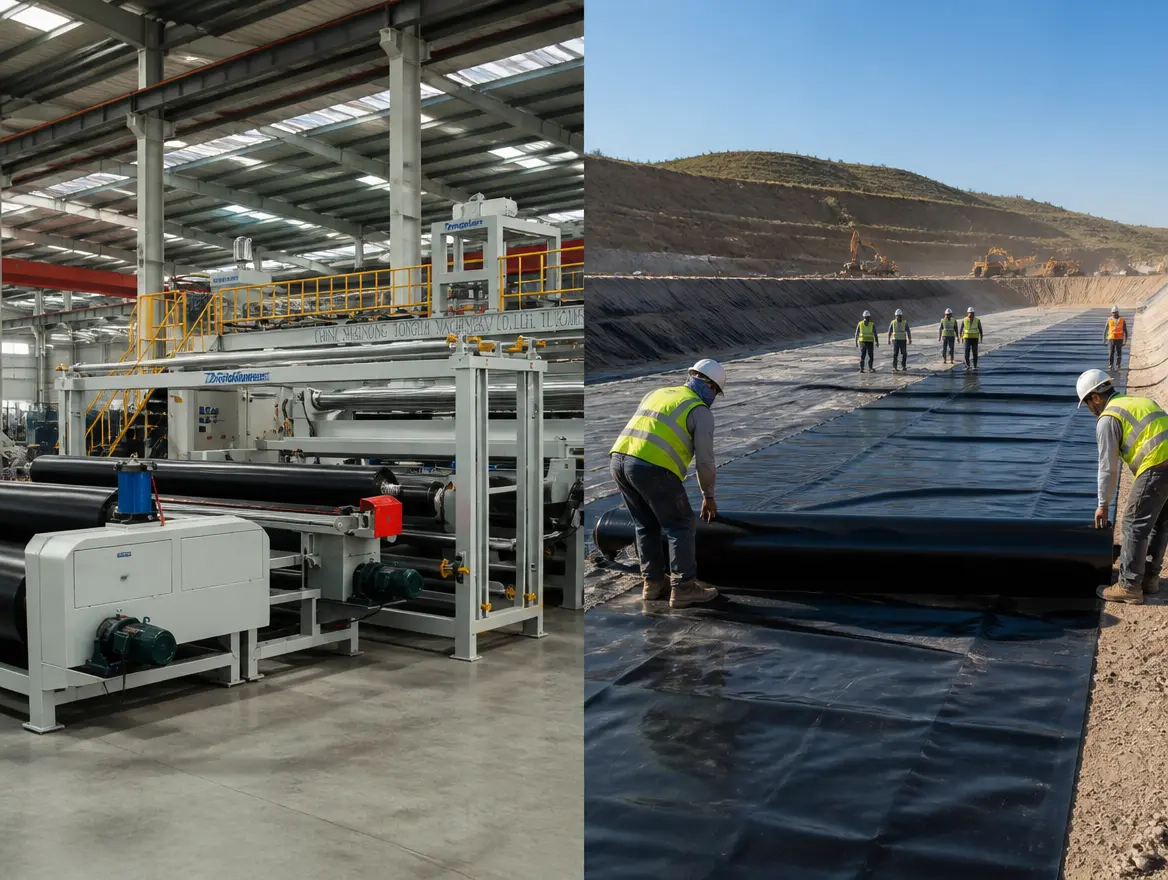
Civil Material Suppliers for Landfill and Reservoirs
Supply geomembrane rolls directly to landfill, reservoir and canal contractors on large government and municipal projects, with ca...
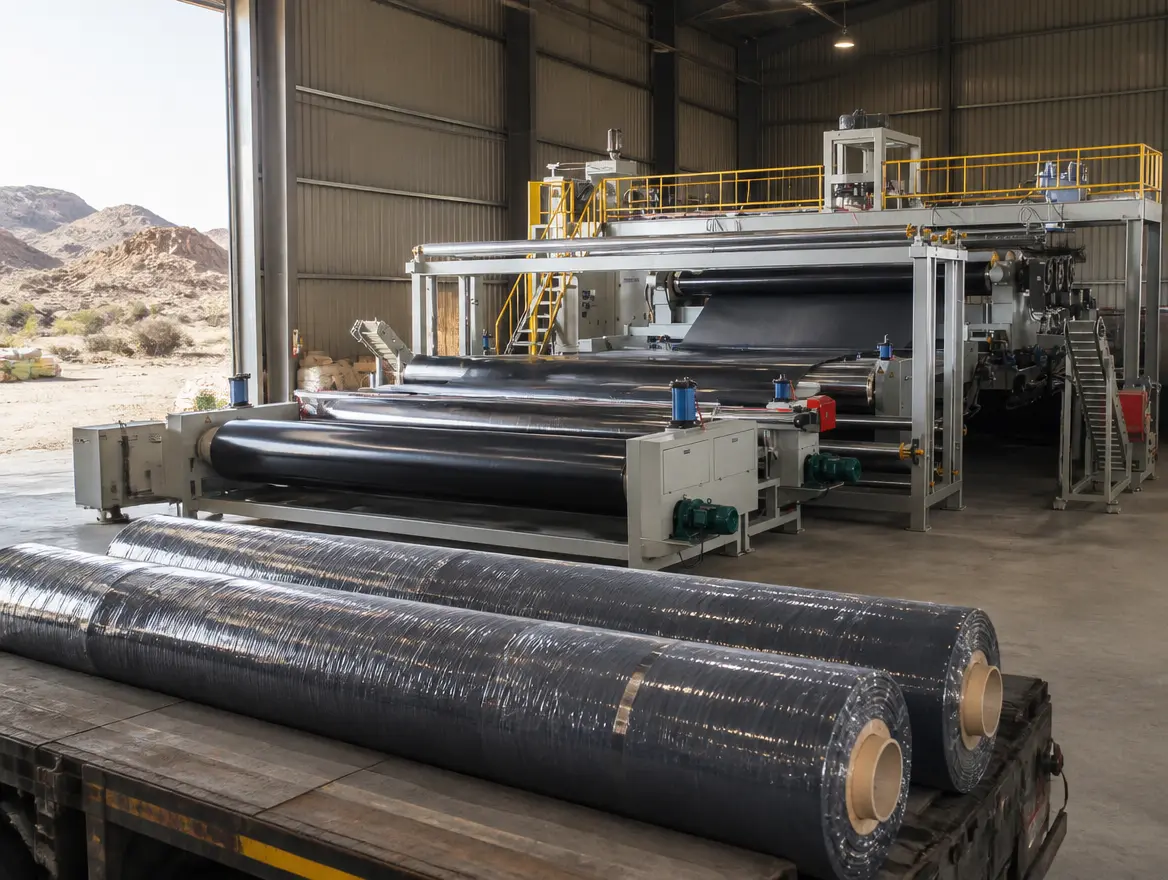
Mining and Industrial Liner Producers
Produce heap-leach pad liners, tailings containment sheets and industrial effluent pond liners in-house for mining and industrial...
Specifications
Technical data
Specifications are supplied by the manufacturer. Custom configurations available. Speak to our engineers.
Request Full DatasheetTJ-TGM3000 (3,000 mm Line)
Product Width
3,000 mm
Sheet Thickness
0.7–3 mm
Screw Diameter
Ø120 mm
L/D Ratio
33:1
Roller Diameter
Ø400 mm
Production Speed
1–5 m/min (panel); 2–10 m/min (standard)
Output
~300 kg/h
TJ-TGM4000 (4,000 mm Line)
Product Width
4,000 mm
Sheet Thickness
0.7–3 mm
Screw Diameter
Ø150 mm
L/D Ratio
33:1
Roller Diameter
Ø500 mm
Production Speed
1–5 m/min (panel); 2–10 m/min (standard)
TJ-TGM5000 (5,000 mm Line)
Product Width
5,000 mm
Sheet Thickness
0.7–3 mm
Screw Diameter
Ø150×2 mm
L/D Ratio
33:1
Roller Diameter
Ø600 mm
Production Speed
1–5 m/min (panel); 2–10 m/min (standard)
TJ-TGM6000 (6,000 mm Line)
Product Width
6,000 mm
Sheet Thickness
0.7–3 mm
Screw Diameter
Ø160×2 mm
L/D Ratio
33:1
Roller Diameter
Ø700 mm
Production Speed
1–5 m/min (panel); 2–10 m/min (standard)
TJ-TGM8000 (8,000 mm Line)
Product Width
8,000 mm
Sheet Thickness
0.7–3 mm
Screw Diameter
Ø180×2 mm
L/D Ratio
33:1
Roller Diameter
Ø800 mm
Production Speed
1–5 m/min (panel); 2–10 m/min (standard)
Output
~1,500 kg/h
Common Specifications (All Models)
Membrane Materials
PE (HDPE, LDPE, LLDPE), PVC, TPO, EPDM
Thickness Range
0.7 to 3 mm (adjustable on-line)
Output Range
300 to 1,500 kg/h
Production Speed
1–5 m/min (panel); 2–10 m/min (standard)
Width Range
2 m to 8 m (adjustable)
L/D Ratio
33:1 on all models
Control System
Intelligent PLC with energy-saving features
Return on Investment
What this machine saves you
The numbers Indian manufacturers use to justify the CAPEX internally.
Up to 8,000 mm
Max Membrane Width
The TJ-TGM8000 produces membranes 8,000 mm wide, which cuts the number of field welds on landfill, reservoir and canal liner jobs. Fewer welds means less installation time and fewer potential leak points.
Up to 1,500 kg/h
Max Output Rate
At 1,500 kg/h on the TJ-TGM8000, high-volume membrane orders are met with fewer production hours, reducing energy cost per kilogram of finished liner.
4
Materials on One Line
PE (HDPE/LDPE/LLDPE), PVC, TPO and EPDM all run on the same production platform, letting you switch membrane type to serve different market segments without a second machine.
Complete Package
What's included with every machine
From factory to running on your floor, Magnum handles it end to end.
The Production Line
Factory-tested at the Tongjia OEM plant before dispatch
Import & Customs
Sea freight and customs clearance to your site, handled by Magnum
Installation & Setup
Coordinated by Magnum with OEM-backed engineers
Operator Training
On-site run-in and operator training at start-up
Factory-Supplied Spares
Wear parts sourced to order from the Tongjia OEM
Technical Support
Remote and OEM-backed support after start-up
Buying Through Magnum
One accountable partner, end to end
Magnum is the authorised India partner for Tongjia geomembrane machinery. We size the line with the factory for your target materials, widths and output rate, manage import and customs, install it on your floor with OEM-backed engineers and train your operators at start-up. Wear parts and technical support run through the same contact afterwards.
Authorised India Partner
A direct link to the Tongjia factory for specification, pricing and engineering support.
One Point of Accountability
A single team for sourcing, import, customs, installation and training.
On-Site Installation & Training
Factory-backed engineers install the line and train your operators in person.
Factory-Supplied Spares
Genuine wear parts sourced directly from the Tongjia manufacturer.
Key Features
Engineering deep-dive
For maintenance teams and production engineers who want to look under the hood.
Processes four membrane types on one platform: PE (HDPE, LDPE, LLDPE), PVC, TPO and EPDM
Membrane thickness 0.7 to 3 mm adjustable on-line for different grade and application requirements
Output 300 to 1,500 kg/h depending on model and material selection
Production speed 1 to 5 m/min in panel mode and 2 to 10 m/min in standard extrusion mode
33:1 L/D screw ratio across all five models for consistent plasticization and melt quality
Intelligent control system with energy-saving and precision thickness management features
Supplied, imported, installed and supported across India by Magnum
Watch It Run
See it in action
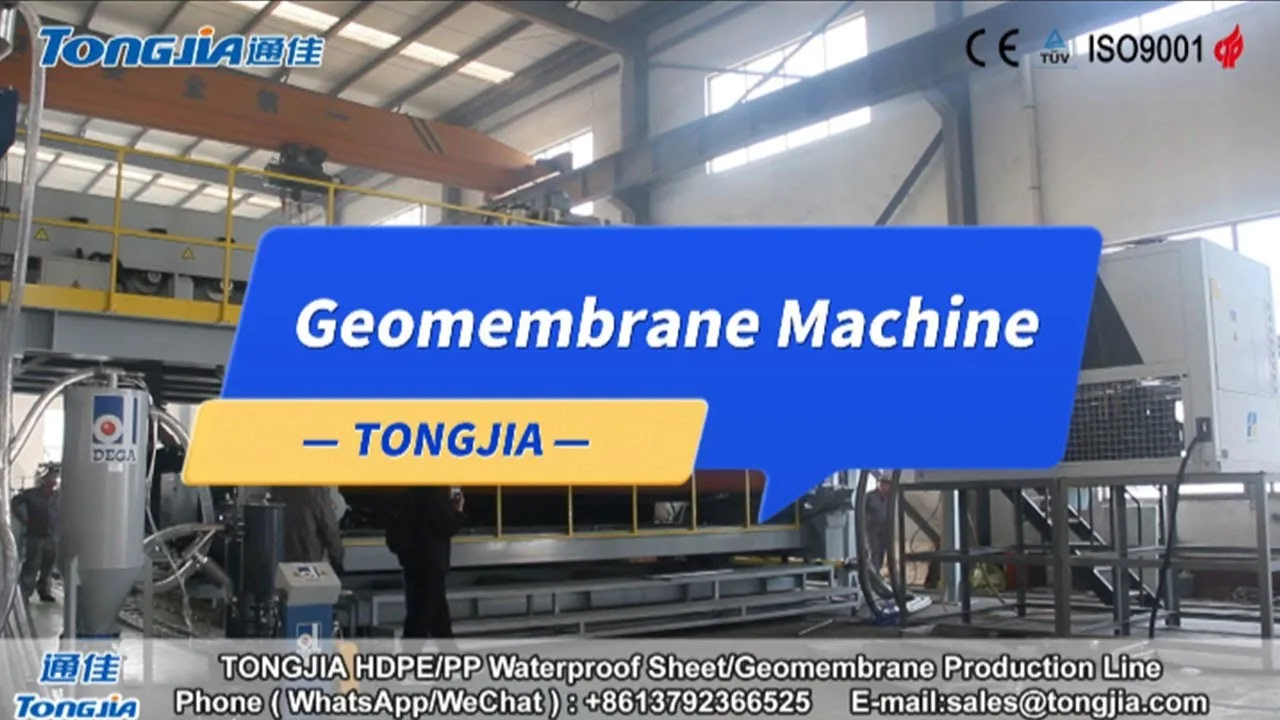
Real footage from OEM demonstrations and factory production trials.
Documentation
Technical downloads
Brochures, datasheets and guides, available on request.
FAQs
Questions Indian buyers ask us
Common questions Indian buyers ask us, answered upfront.
The Tongjia geomembrane production line extrudes four membrane types: PE geomembrane (covering HDPE, LDPE and LLDPE grades), PVC waterproof membrane, TPO waterproof membrane and EPDM waterproof membrane. All four run on the same production platform. PE and HDPE are the most common choice for landfill liners, pond liners and civil waterproofing. PVC suits membrane roofing and tunnel waterproofing. TPO and EPDM are used for roofing, garden installations and applications requiring flexibility at low temperatures.
The five models are TJ-TGM3000 (3,000 mm), TJ-TGM4000 (4,000 mm), TJ-TGM5000 (5,000 mm), TJ-TGM6000 (6,000 mm) and TJ-TGM8000 (8,000 mm) finished membrane width. Wider output reduces the number of field welds during installation and can be a strong selling point on large reservoir and landfill contracts. For a first geomembrane line or a mid-scale operation, the TJ-TGM4000 or TJ-TGM5000 is the most common starting point. If your customers demand wide rolls or you are targeting large government infrastructure projects, the TJ-TGM6000 or TJ-TGM8000 is the right model.
The main buyers are geosynthetics manufacturers adding geomembrane to an existing geocell, geogrid or geotextile range; PVC or PE polymer processors wanting to enter the waterproofing market; and civil material suppliers who want captive supply for large reservoir, canal or landfill contracts. Dedicated waterproofing applicators running high volumes of landfill or mining liner projects also justify in-house production once consumption is sufficient. This line is aimed at companies that produce and sell geomembrane, not at contractors who use it on site.
Output runs from around 300 kg/h on the TJ-TGM3000 up to 1,500 kg/h on the TJ-TGM8000. Production speed is 1 to 5 m/min in panel mode and 2 to 10 m/min in standard mode. Membrane thickness adjusts on-line from 0.7 to 3 mm, which lets you switch between standard 1 mm pond liner grades and heavier 2 to 3 mm landfill liner grades on the same machine without a separate setup.
The primary material is PE polymer, covering HDPE, LDPE and LLDPE grades. HDPE is the standard for landfill liners and civil geomembrane work because of its chemical resistance and stiffness. LLDPE is used where more flexibility is needed, such as pond liners on uneven ground. The line also processes PVC compound for membrane roofing and tunnel waterproofing, and TPO and EPDM rubber compounds for roofing and specialist waterproofing where flexibility and UV resistance matter most.
In India the largest demand segments are landfill liner projects under solid waste management initiatives, water conservancy work (canal liners, reservoir waterproofing, check dams), and effluent treatment ponds for industrial and municipal sewage. Mining heap-leach pads and tailings containment are growing segments, particularly in Rajasthan, Jharkhand and Odisha. Construction applications include tunnel waterproofing, metro station linings and basement waterproofing on large urban projects. Aquaculture (fish and shrimp farms in coastal Andhra Pradesh, Odisha and West Bengal) and agriculture (biogas digesters, farm ponds) round out the buyer base.
HDPE geomembrane is the standard civil engineering liner material. High chemical resistance, UV stability and puncture resistance make it the default specification for landfills, hazardous waste pits and reservoirs. PVC membrane is softer and more flexible, easier to install on complex shapes, and preferred for roofing and tunnel applications. TPO is a thermoplastic polyolefin that combines flexibility with UV resistance and is used in commercial roofing and planted roof systems. EPDM is an elastomeric rubber membrane with good UV and ozone resistance, suited for garden ponds, decorative water features and specialist roofing. All four material types run on the same Tongjia production line.
Typical lead time is around 16 to 20 weeks from order: manufacture and factory testing at the Tongjia plant in Shandong, followed by sea freight and customs clearance into India. Magnum manages import documentation, customs, delivery to site, line installation with OEM-backed engineers, and operator training at start-up. Wear parts and technical support stay with the same contact after the line is brought online.
Engagement options
Evaluate Geomembrane Production Line (PE, PVC, TPO, EPDM) on your terms
Capex decisions deserve a serious conversation. Pick the channel that fits your stage, whether you're specifying, validating or still scoping. Each one routes to the right person on our team within one business day.
Request a Quotation
Configured pricing with lead time, installation, spares and AMC. Detailed proposal in one business day.
Application Engineer Call
30-minute technical review of throughput, substrate compatibility and integration with your existing line.
WhatsApp the Sales Desk
Fastest channel for spec sheets, brochures and quick clarifications. Replies during business hours.
See the Machine Running
Arrange a factory demonstration or a recorded run of this machine on your material.
Enquire
Talk to a Magnum specialist
Tell us about your production line and what you're trying to achieve. We'll come back within one business day with pricing, lead time and any technical questions answered.