New Delhi, March 2026
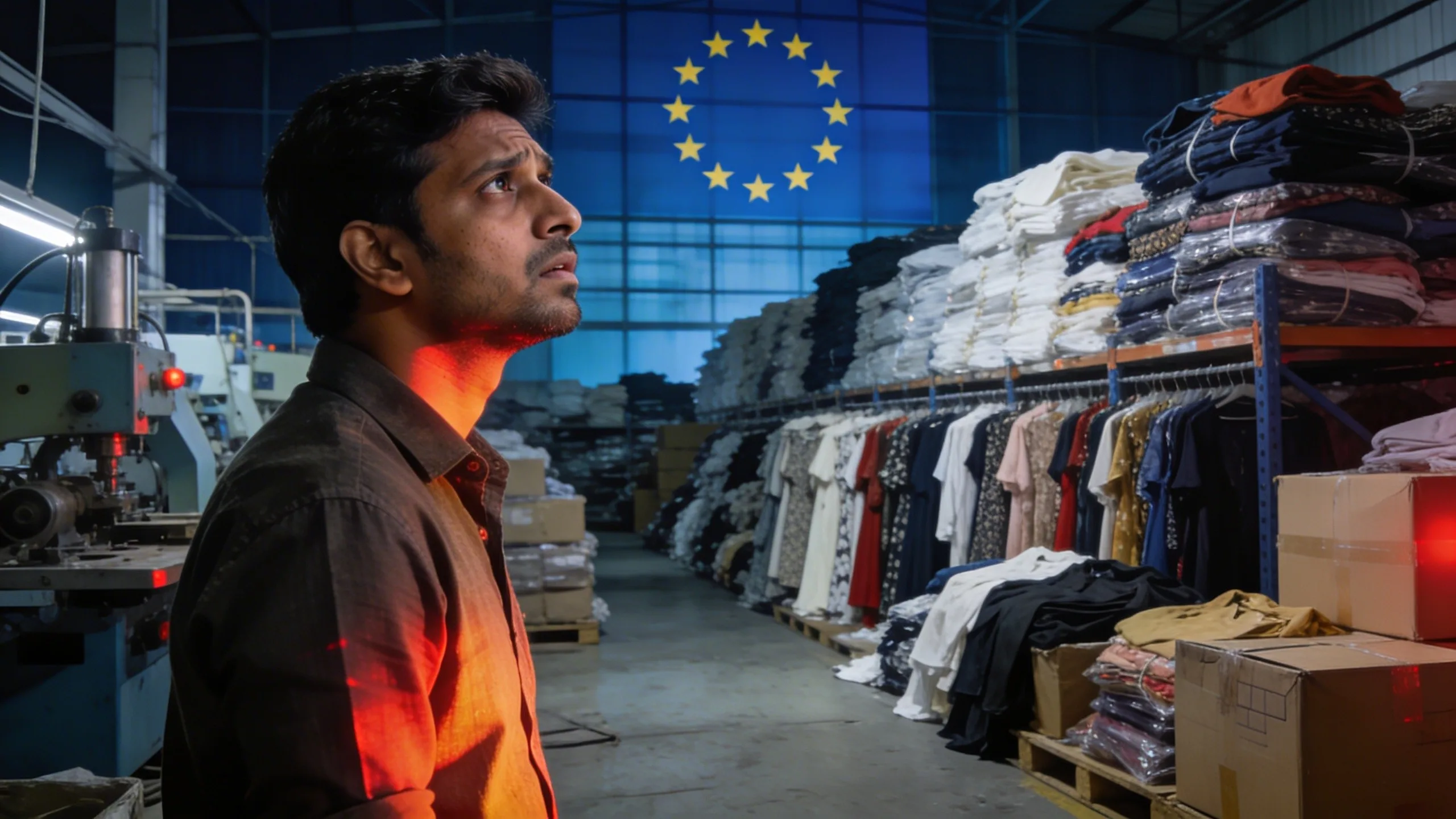
Starting July 19, large European companies will no longer be allowed to destroy unsold apparel, clothing accessories, and footwear. The ban, introduced under the EU's Ecodesign for Sustainable Products Regulation, will extend to medium-sized companies by 2030. For Indian textile exporters who ship 30 to 35 per cent of their output to Europe, the regulation changes the math on overproduction, returns handling, and end-of-life planning.
The Scale of Textile Waste in Europe
The regulation is a response to waste numbers that are hard to ignore. An estimated 4 to 9 per cent of textiles produced in Europe each year are destroyed without ever being worn, generating around 5.6 million tonnes of CO2 emissions annually. The European Commission wants companies to manage stock better, handle returns, and explore alternatives like resale, remanufacturing, or donation instead of sending unsold goods to incinerators.
K.M. Subramanian, President of the Tiruppur Exporters' Association, has noted that EU buyers are already seeking cooperation from Indian suppliers to comply with these mandates. Tiruppur, India's largest knitwear export hub, sends roughly a third of its production to European markets. The expectation is that Indian manufacturers will need to participate in take-back schemes and demonstrate recycling capability as a condition of doing business.
India's Textile Recycling Infrastructure
India's recycling infrastructure is not starting from zero. Panipat in Haryana, about 90 km north of Delhi, has operated as Asia's largest textile recycling hub for years. The town processes imported used clothing into blankets, yarn, and lower-grade garments. But the technology is mostly mechanical, and the output is limited to coarser products. Processing post-consumer waste into fibre that can go back into apparel-grade fabric requires different equipment altogether.
That gap is where automation becomes unavoidable. Industrial guillotine cutters, shredders, and fibre openers from companies like Spain's LIDEM are designed specifically for high-volume textile waste processing. Magnum, which distributes LIDEM machinery in India, has seen increased interest from Panipat-based recyclers and from newer processing units in Gujarat and Tamil Nadu that are building capacity ahead of anticipated EPR regulations for textiles.
EPR and the Road Ahead for Indian Exporters
India's own EPR framework for textiles is still under policy consideration, but the trajectory is clear. The government has already implemented EPR for plastics, e-waste, batteries, and tyres. Industry analysts at SORT Consultancy project that textile EPR could be enforced by April 2026, with a proposed target of 80 per cent collection by 2030. French textile recycling company Reju announced plans to invest in India in January 2026, a signal that international capital sees the opportunity forming.
The challenge for Indian recyclers is not just volume but accuracy. Paul Doertenbach, a global textile recycling expert at Landbell Group, has argued that manual sorting cannot keep pace with the volume of discarded garments. Digital product passports, which track a garment's fibre composition and processing history, could help solve that problem. But such systems require investment in both hardware and data infrastructure that most Indian recycling units do not yet have.
The July 2026 EU deadline is three months away. Indian exporters who view it as a European problem will find that it becomes an Indian problem very quickly. The manufacturers who build recycling partnerships and upgrade their waste processing capabilities now will be the ones European brands keep on their supplier lists. Those who wait will discover that compliance pressure only moves in one direction.